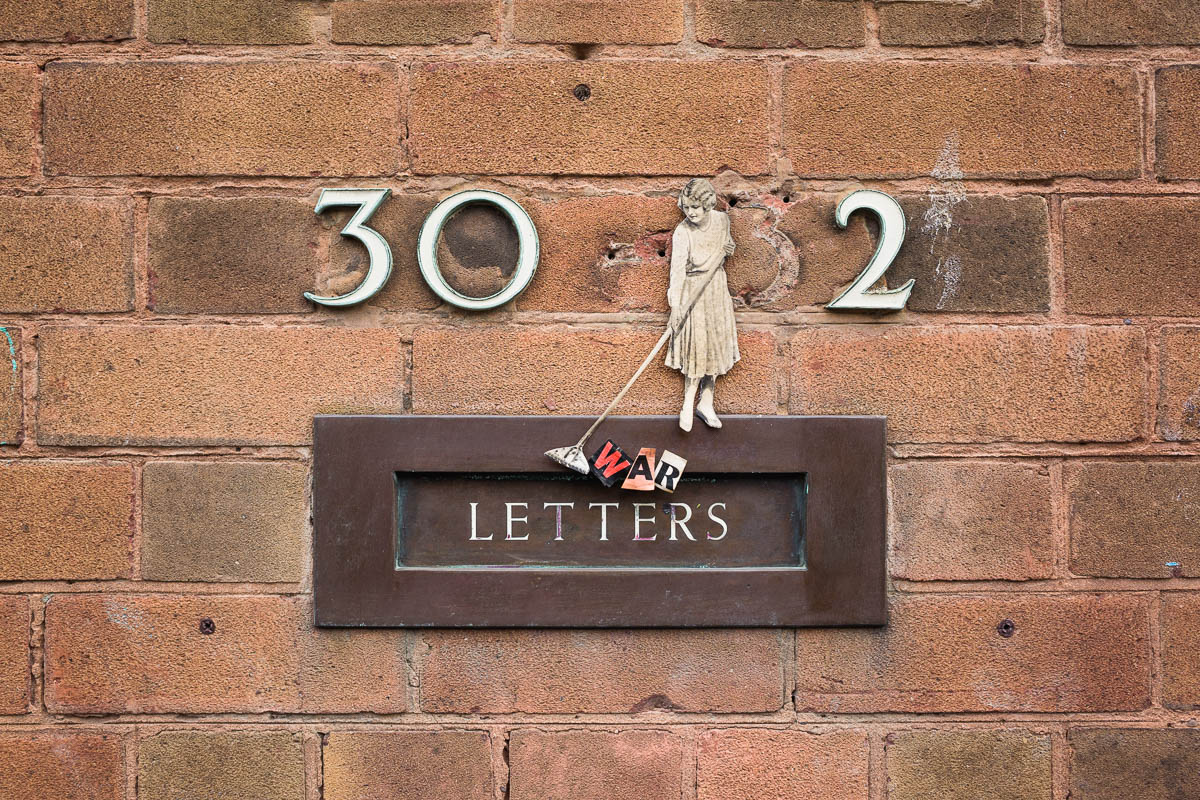
Cities are shaped not only by their buildings but by the countless marks left upon them. Graffiti, posters, stickers, painted-over signs, construction hoardings, fading advertisements, worn brickwork, and improvised repairs all become part of a continuous visual conversation. Together, they reveal how people occupy, contest, and reinterpret shared spaces over time.
Marks & Messages explores these accumulated traces throughout Digbeth, Birmingham. Rather than documenting graffiti as an art form, the project considers it as one expression of human presence alongside the everyday surfaces that record use, memory, and change. Walls become places where identities are asserted, opinions shared, histories layered, and moments of humour, protest, remembrance, and anonymity briefly take hold before being altered, obscured, or erased.
The photographs are interested in the city as a living archive. Every layer of paint, every torn poster, every overwritten tag and weathered sign contributes to an evolving record of occupation and belonging. By looking closely at these overlooked details, the work invites a slower consideration of how urban environments quietly preserve evidence of the people who have passed through them.
Set against the continuing regeneration of Digbeth, the project also reflects on the changing relationship between expression and development. Temporary murals stand beside demolition sites, painted walls disappear behind new construction, and familiar surfaces are replaced by fresh façades and luxury developments. In this context, the photographs ask what happens to a city’s visual memory as its physical landscape is transformed.
Ultimately, Marks & Messages is less about graffiti than about the ways people leave traces of themselves in the places they inhabit. It explores the city as a shared surface upon which identities, memories, and everyday acts of expression continually accumulate, overlap, and fade, revealing an urban landscape that is never fixed but always in conversation with those who shape it.