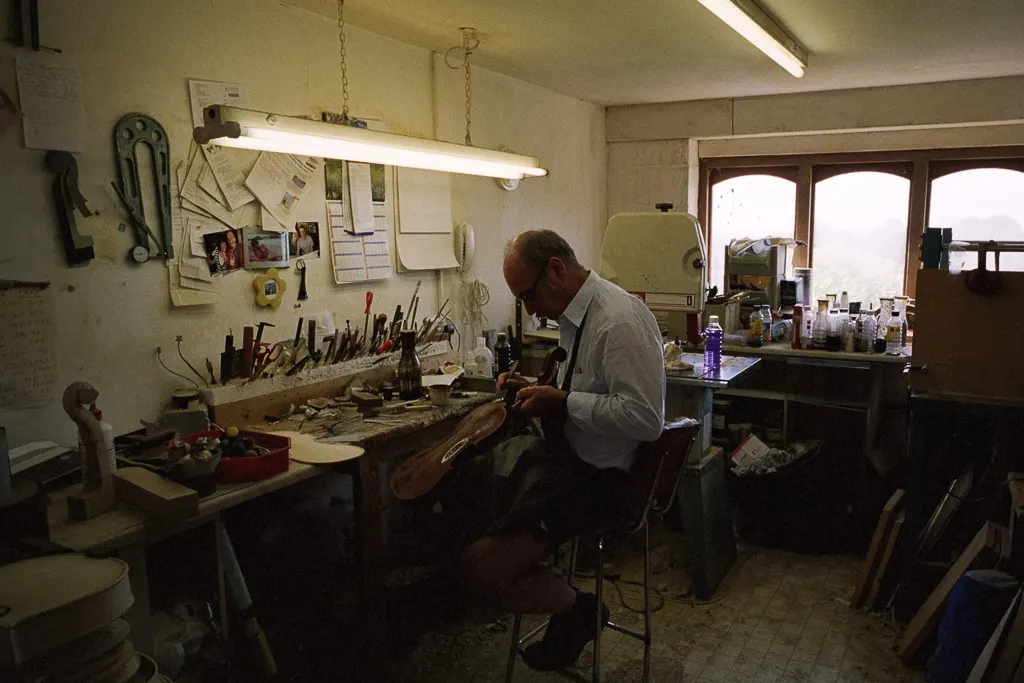
While some violin makers achieve widespread fame, many other skilled artisans remain known only within a close-knit circle of musicians and collectors. These luthiers dedicate their lives to their craft, producing instruments that resonate with exceptional quality and character. One such master craftsman is William Piper, a contemporary violin maker whose work has quietly shaped the world of stringed instruments.
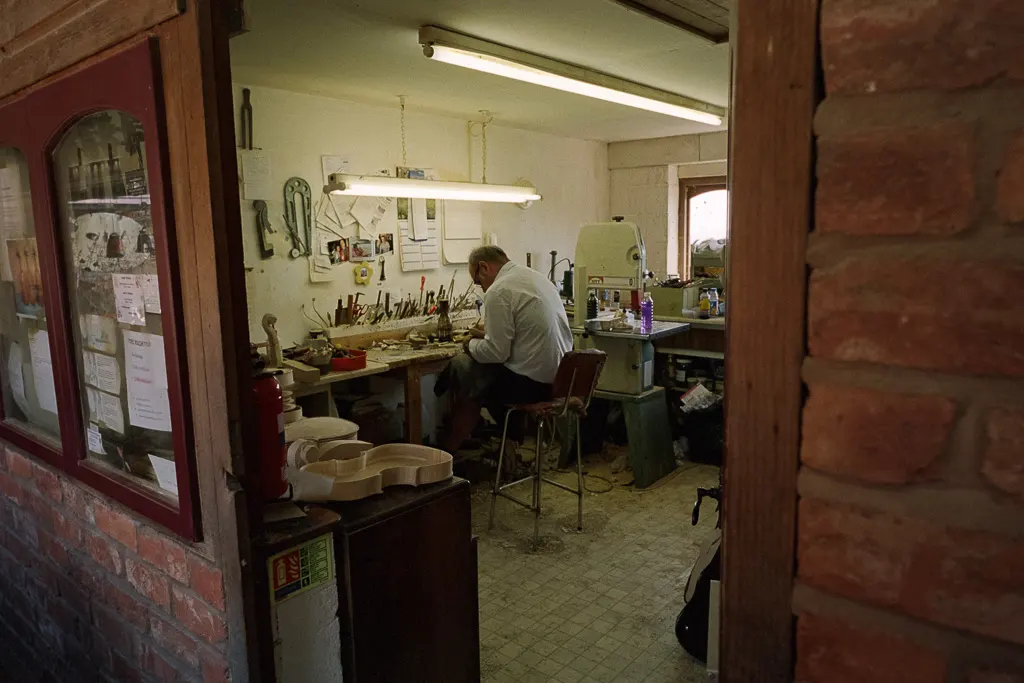
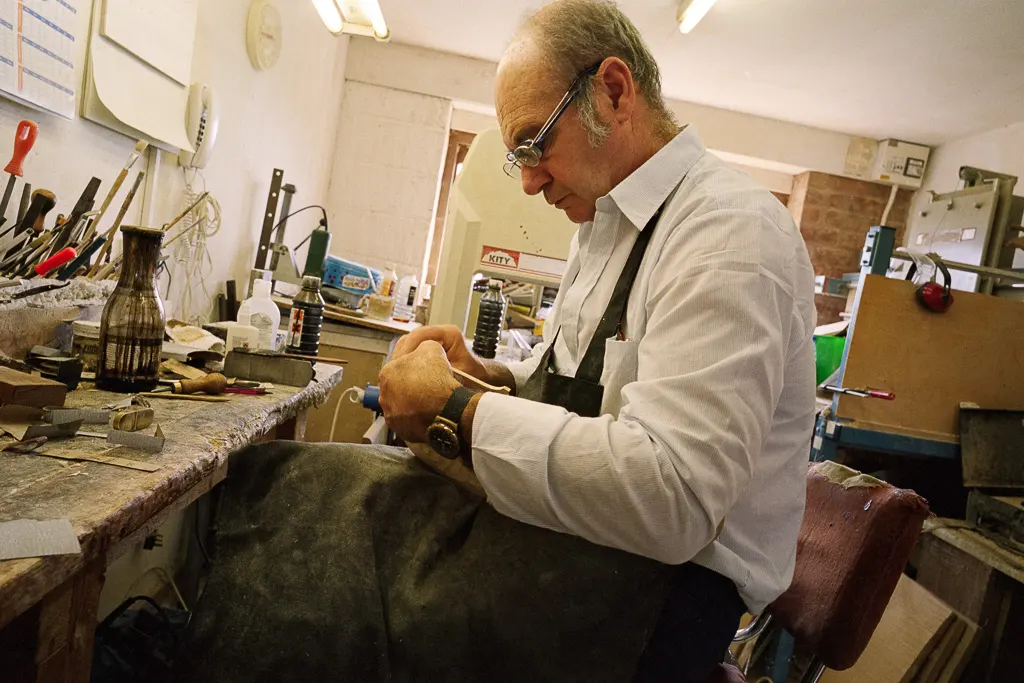
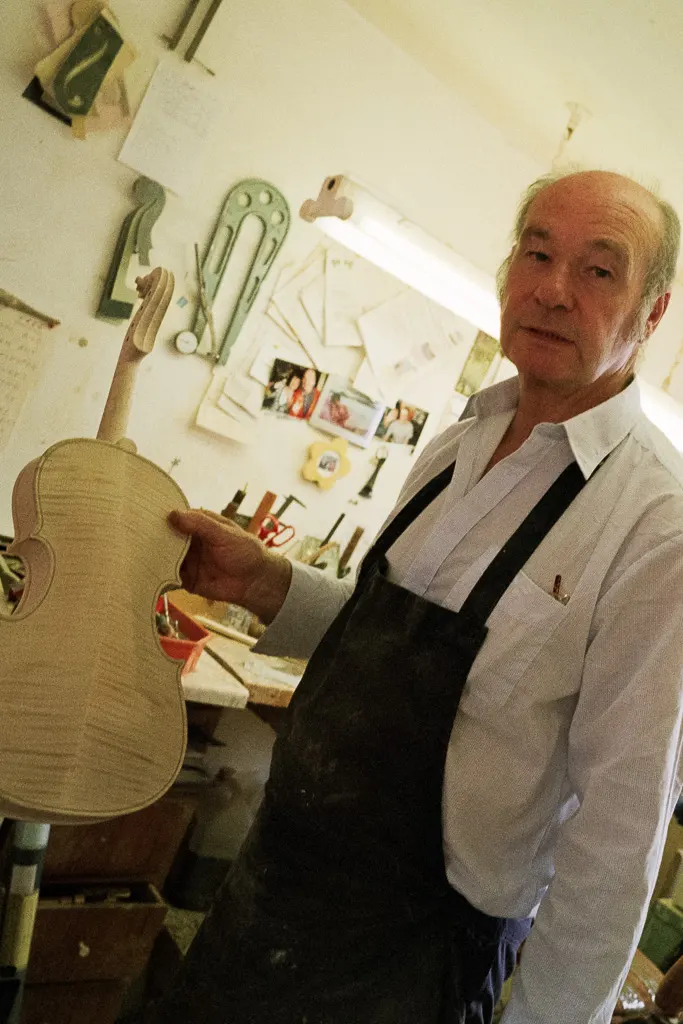
I took these photos in 2012 of master violin maker William Piper in his workshop at the Jinney Ring Craft Centre (Worcestershire), a unique location known for its vibrant community of artisans and traditional craftsmanship.
William Piper’s Journey into Violin Making
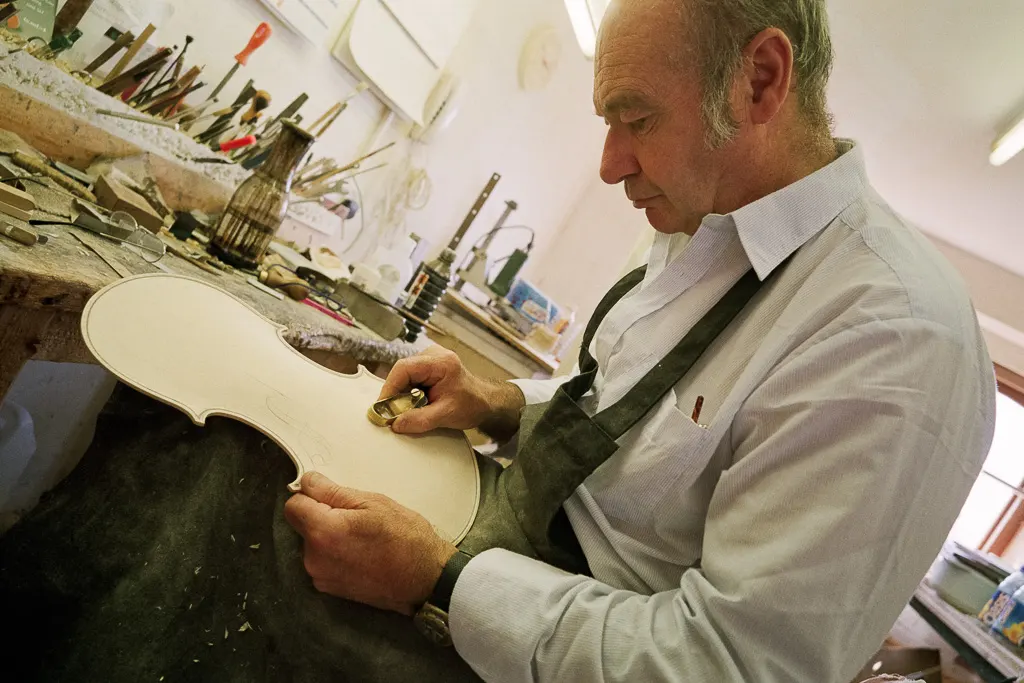
William Piper has been making violins and violas for nearly six decades. His journey began in 1965 when he undertook an apprenticeship at Sydney Evans’ workshop in Birmingham. Under Evans’ mentorship, Piper learned the delicate balance of precision and artistry required to string instruments with superior tonal quality. This period undoubtedly laid the foundation for his lifelong passion for violin making.
Following his apprenticeship, Piper established a workshop in Birmingham, where he refined his techniques and developed his signature style. Later, he moved his practice to the Jinney Ring Craft Centre in the West Midlands, an inspiring setting where visitors could witness the violin-making process firsthand.
An Internationally Respected Violin Maker
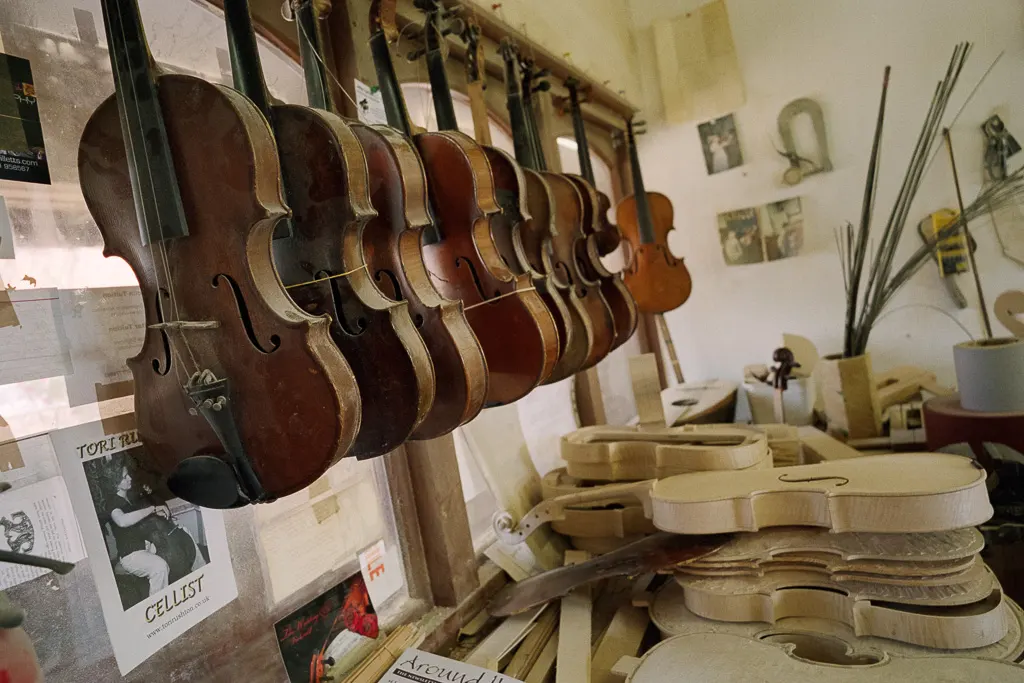
Over the years, Piper’s reputation grew beyond the UK. Today, musicians across the globe play his violins, prized for their craftsmanship, sound quality, and attention to detail. With over 700 instruments to his name, his work has become a fixture in the world of violin making, and some of his violins have fetched as much as £3,000 at auction. This recognition speaks not only to the quality of his work, but also to the appreciation musicians and collectors have for his instruments.
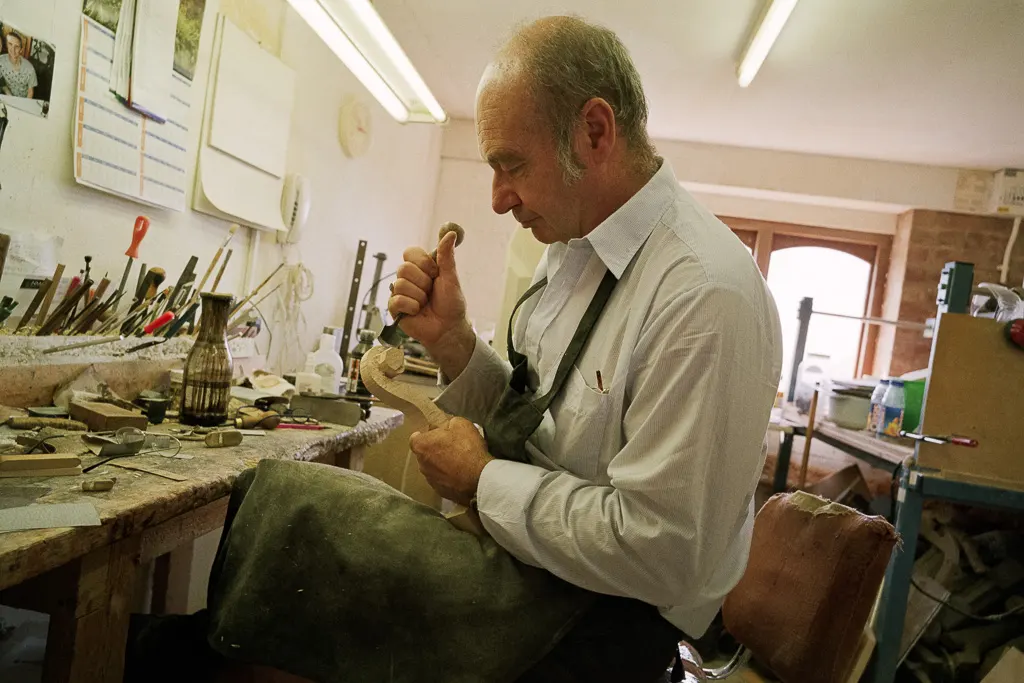
Violin Maker William Piper at Work
In 2012, I photographed William Piper in his workshop, capturing the essence of his craft. Watching him shape wood into instruments that would eventually produce beautiful music was an inspiring experience.
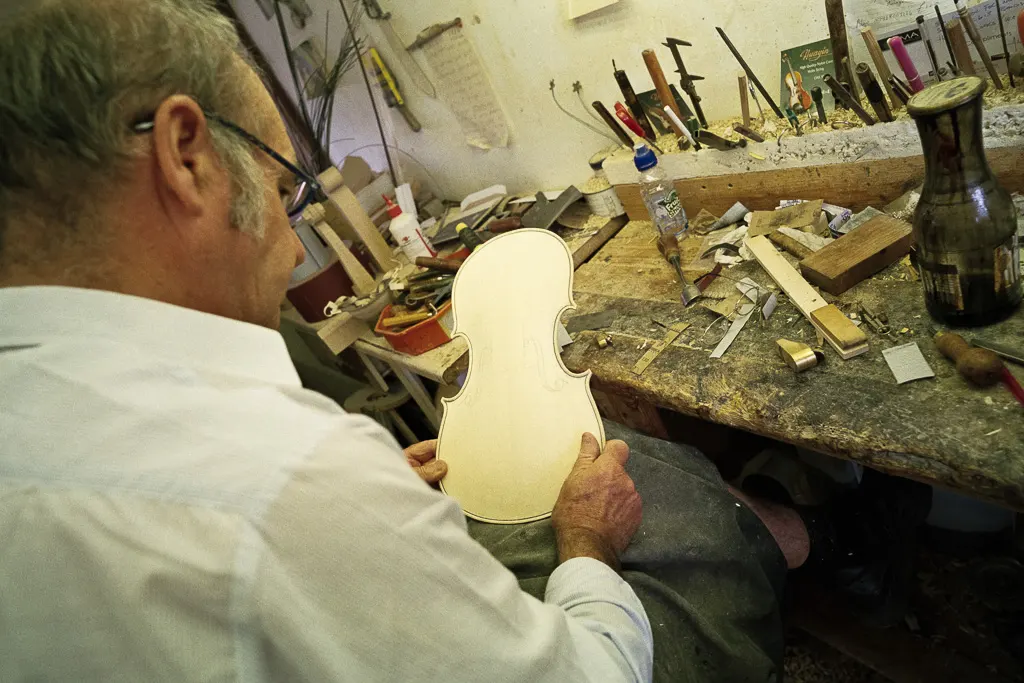
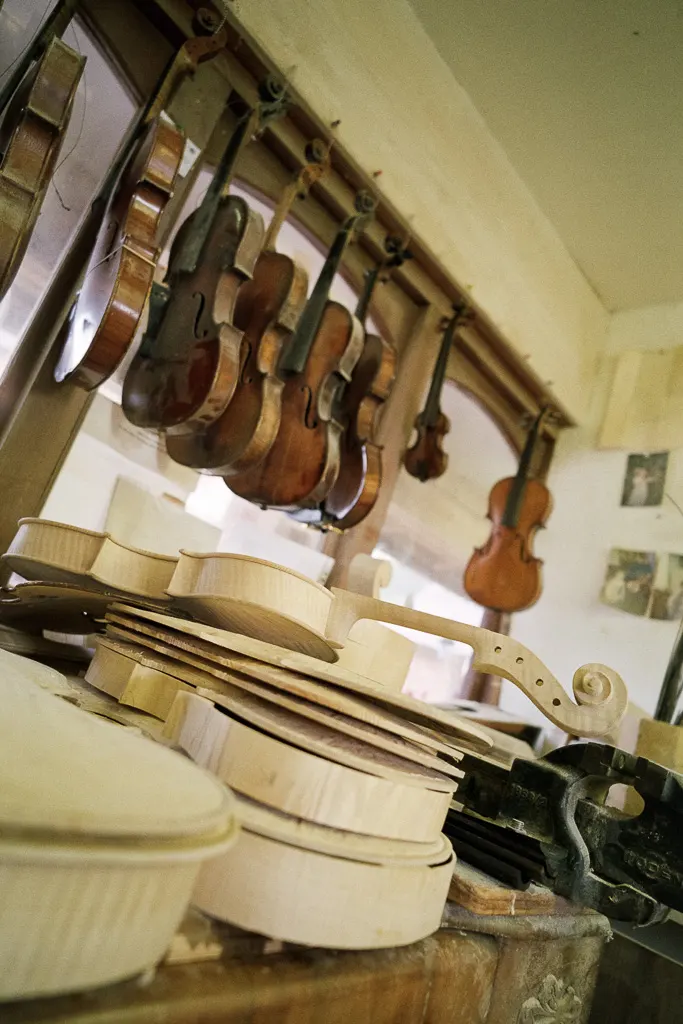
Every violin begins as raw timber, meticulously carved, assembled, and varnished by hand—a process that requires patience, skill, and an intimate understanding of acoustics.
These photos offer a glimpse into the world of a dedicated artisan. His work may not always make headlines, but his violins continue to impact musicians and their audiences.
Behind the Lens
Date: August 2012
Location: Jinney Ring Craft Centre, Worcestershire
Camera: Contax G2 (35mm) with 45mm f/2 lens
Film: Kodak Portra 400 (colour)
Scan: Minolta DiMAGE Scan Elite 5400 using VueScan
Share the Story
If you found this article interesting, spread the word! Violin-making is an art form that deserves recognition. And William Piper’s story is a testament to the dedication and skill that go into every handcrafted instrument.


