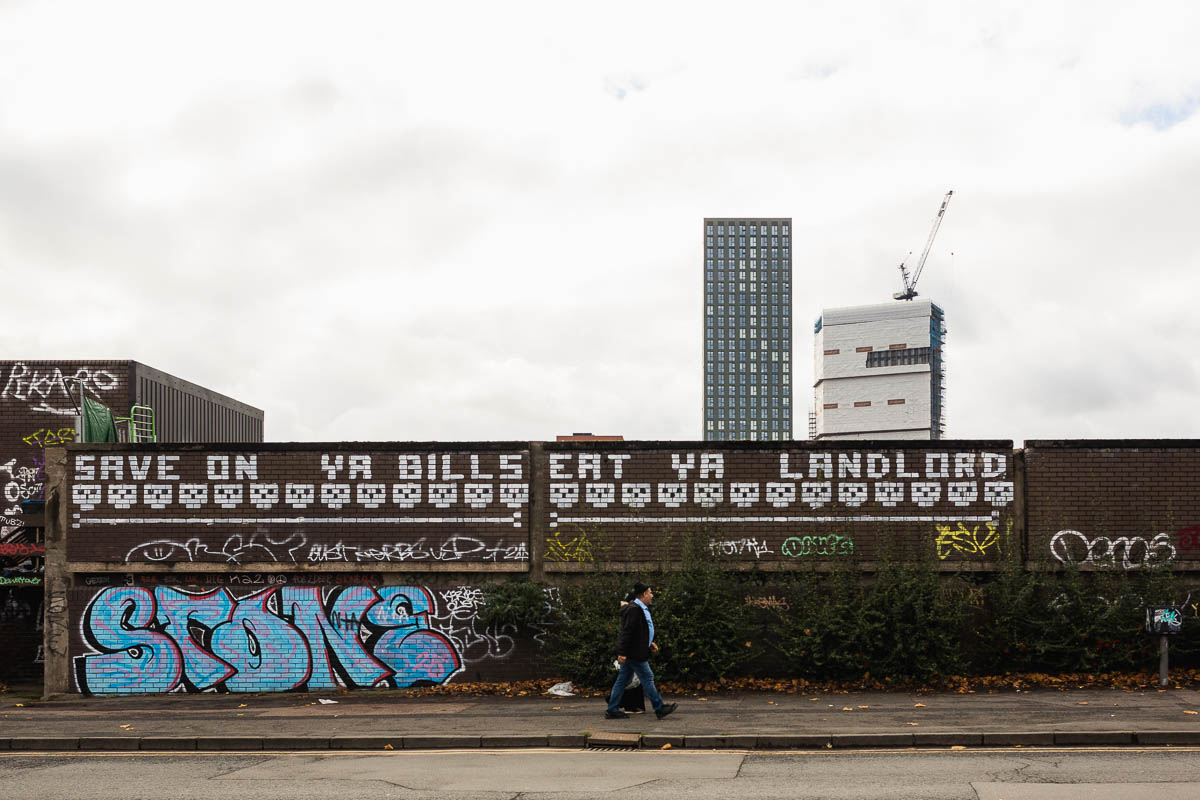
For more than two centuries, Digbeth has been one of Birmingham’s defining industrial districts. Its streets grew around factories, warehouses, railway arches, workshops, and canals that helped shape the city’s manufacturing identity. Although many industries have disappeared, their presence remains visible in weathered brickwork, painted signs, loading bays, and the buildings that continue to support small businesses, artists, and independent makers.
Today, Digbeth is changing at a remarkable pace.
Digbeth: A Changing Landscape is an ongoing documentary project exploring a neighbourhood caught between its industrial past and an uncertain future. New apartment towers rise where factories once stood, construction sites replace familiar streets, and a new tram line is being built to serve residents who have yet to arrive. Many of the developments have been sold long before anyone moves in, while established businesses continue to operate beneath the shadow of demolition and redevelopment.
The project is not simply about regeneration. It is about what happens to a place when one identity gradually gives way to another.
Working over several years, the photographs record a landscape in constant transition. Buildings that stand one month may be reduced to rubble the next. Hoardings appear, cranes reshape the skyline, and streets acquire new rhythms as old routes disappear and new ones emerge. The camera becomes a witness to moments that are often temporary, preserving places that may soon exist only in memory.
Rather than presenting change as either progress or loss, the project observes the coexistence of both. Historic brick warehouses stand beside glass-fronted developments. Faded industrial signage faces luxury apartments. Graffiti, temporary fencing, abandoned workshops, and active construction sites reveal the overlapping layers through which cities continually remake themselves.
At its heart, Digbeth: A Changing Landscape is an exploration of urban memory. It asks what remains when familiar places disappear, how communities adapt as neighbourhoods evolve, and how the physical landscape shapes our sense of identity and belonging. As Digbeth continues to transform, these photographs become not only a record of architectural change, but also a document of a city negotiating its past while imagining its future.