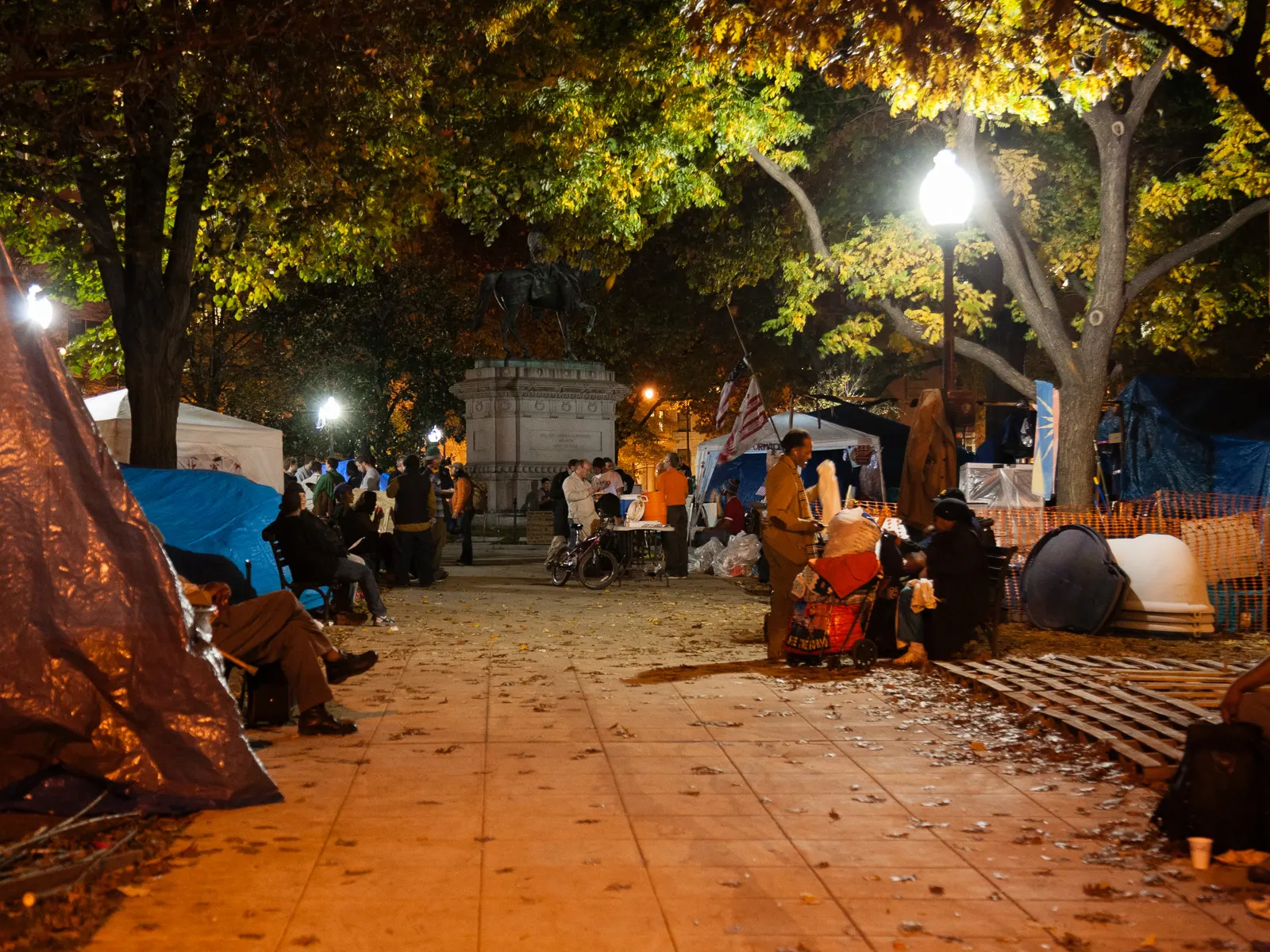
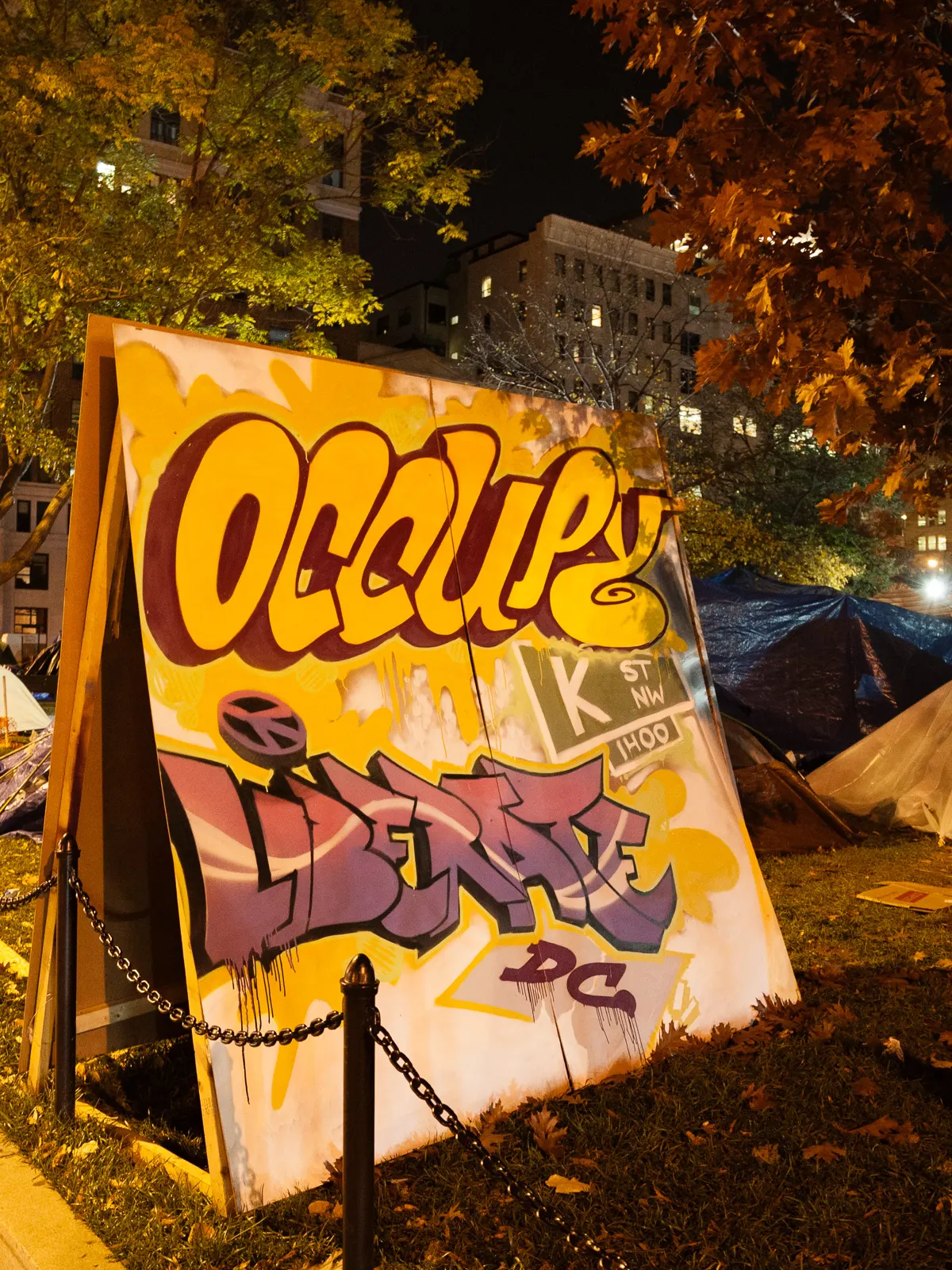
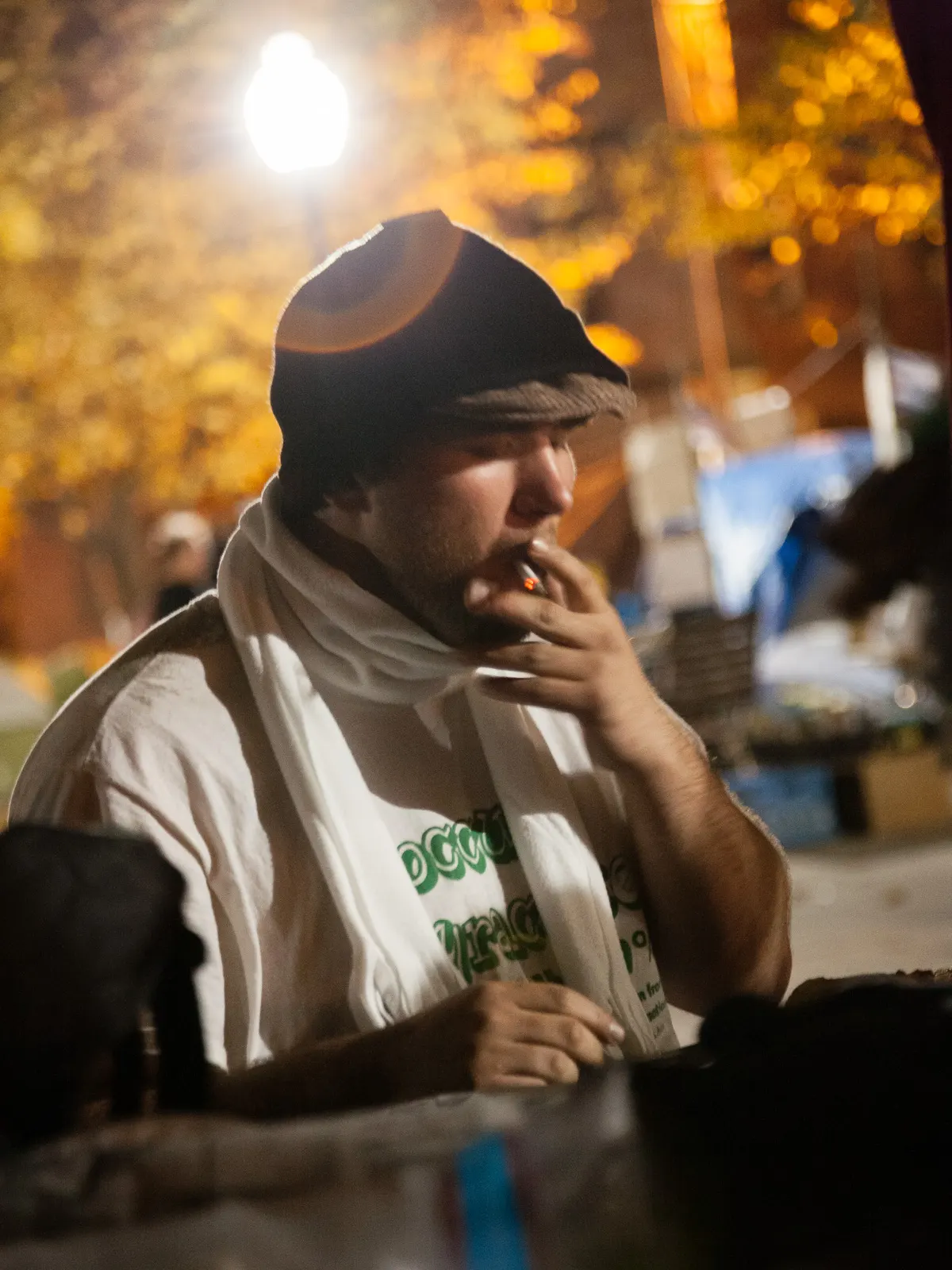
In the fall of 2011, the Occupy movement spread rapidly across the United States, carrying with it a shared anger at economic inequality and a fragile sense of hope. In Washington, D.C., just a few blocks from the White House, McPherson Square became a temporary home for that unrest. One night in November, I walked into the encampment with my camera, and what I found there was not just a protest, but a community in the making.
Occupy Movement at McPherson Square
Where Our Gaze Lands
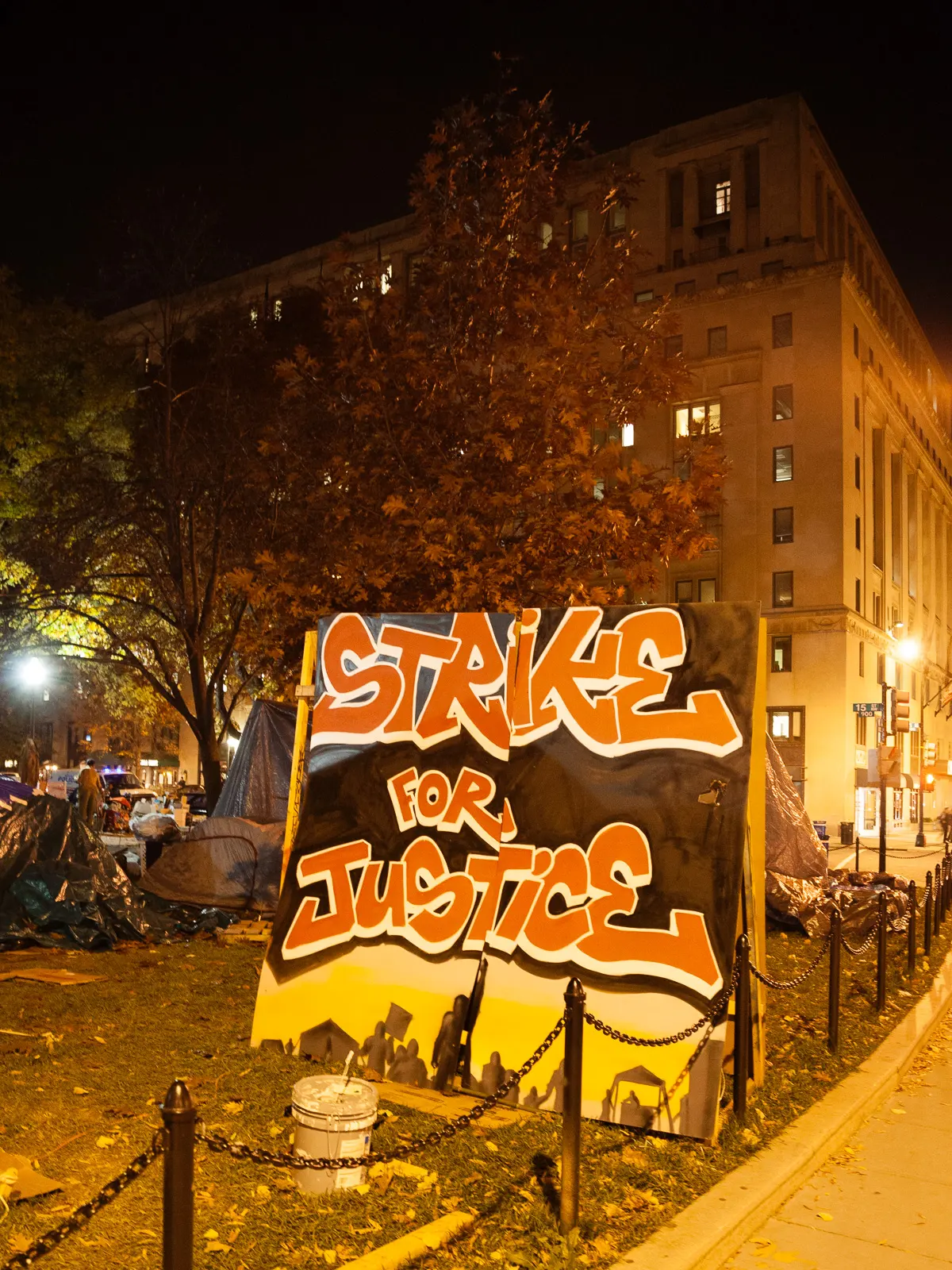
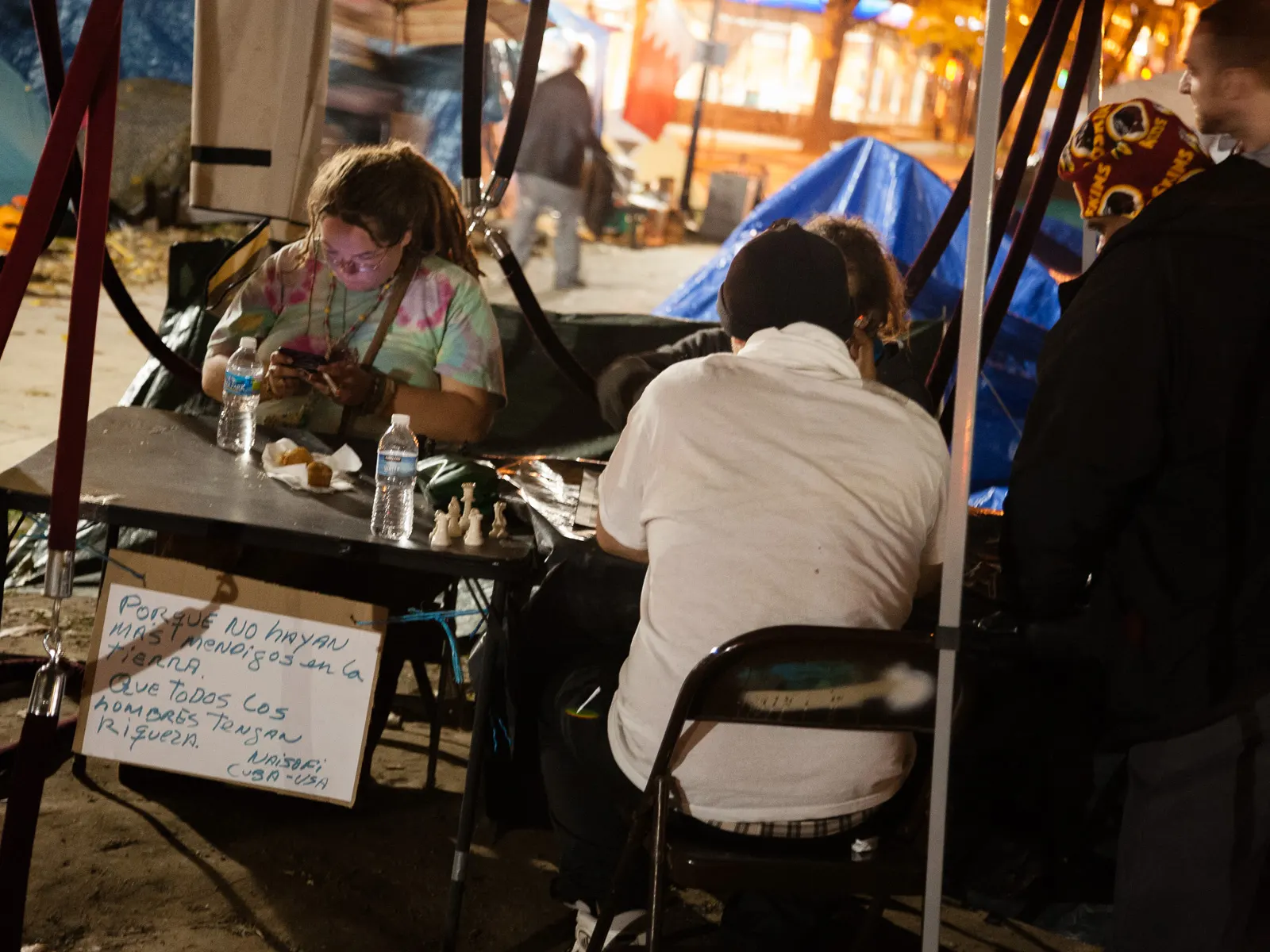
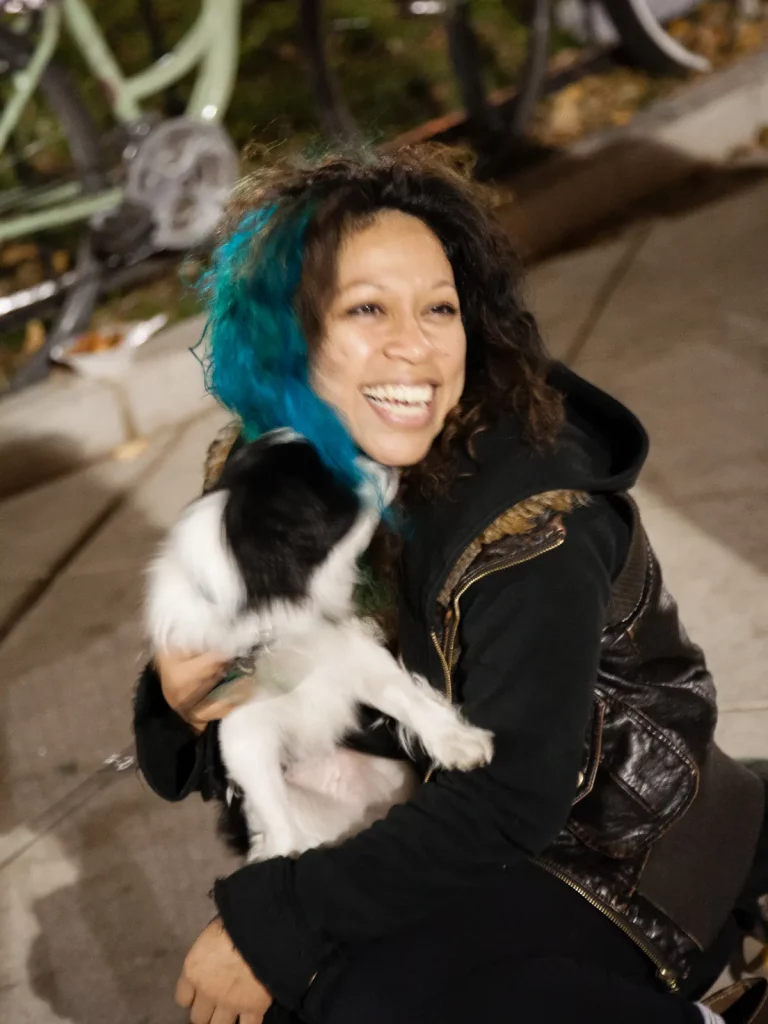
My attention is drawn first to the small, human details. Tents pressed closely together, handwritten signs taped to lampposts, and people huddled in conversation under dim streetlights. The photographs I made linger on faces rather than slogans—on expressions marked by fatigue, determination, and quiet resolve. I was less interested in spectacle than presence: how bodies occupied space, how people claimed visibility in a city built around power and exclusion. The square itself became a stage where ordinary lives were suddenly centre stage.
How the Images Affect Us
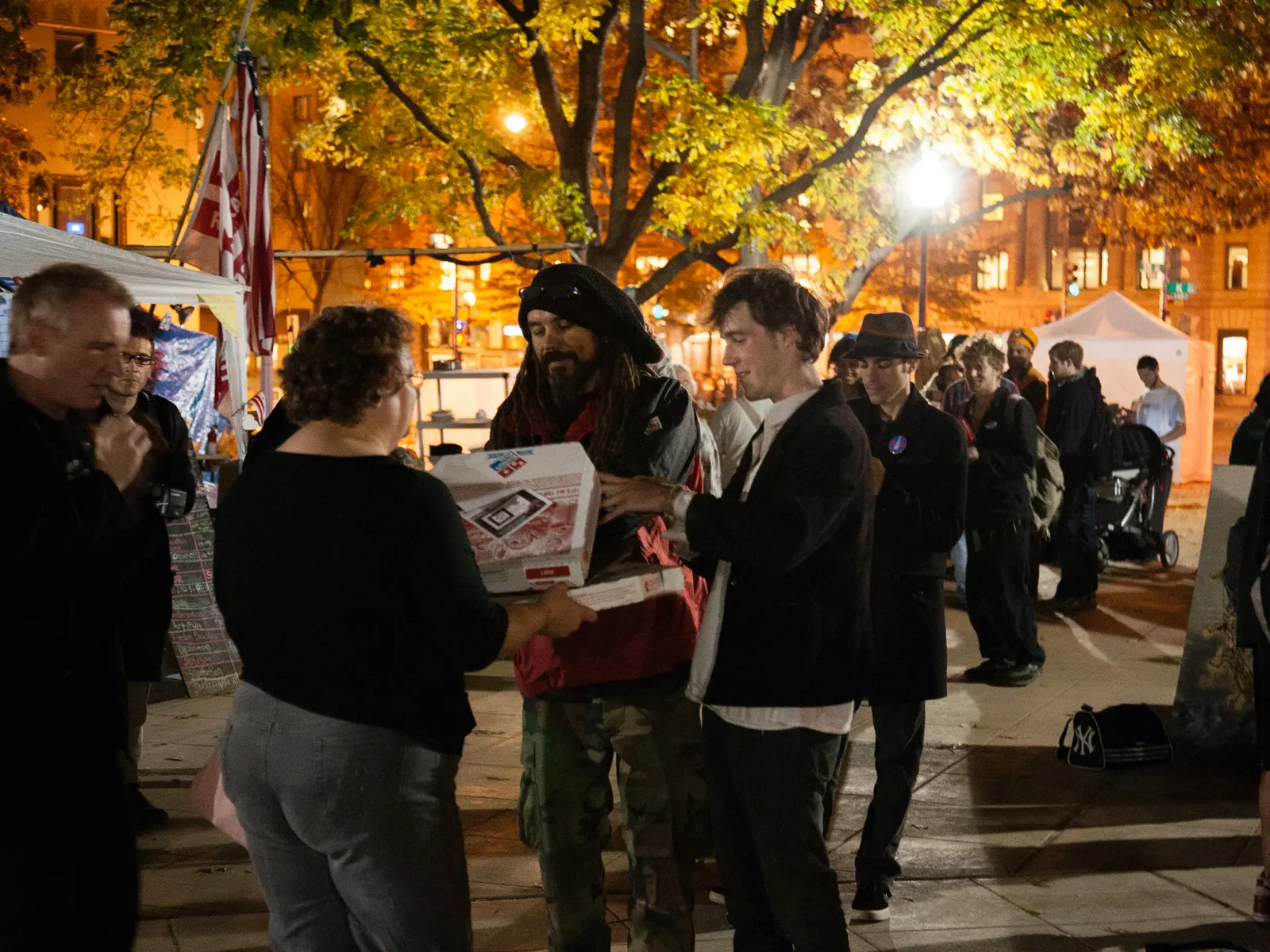
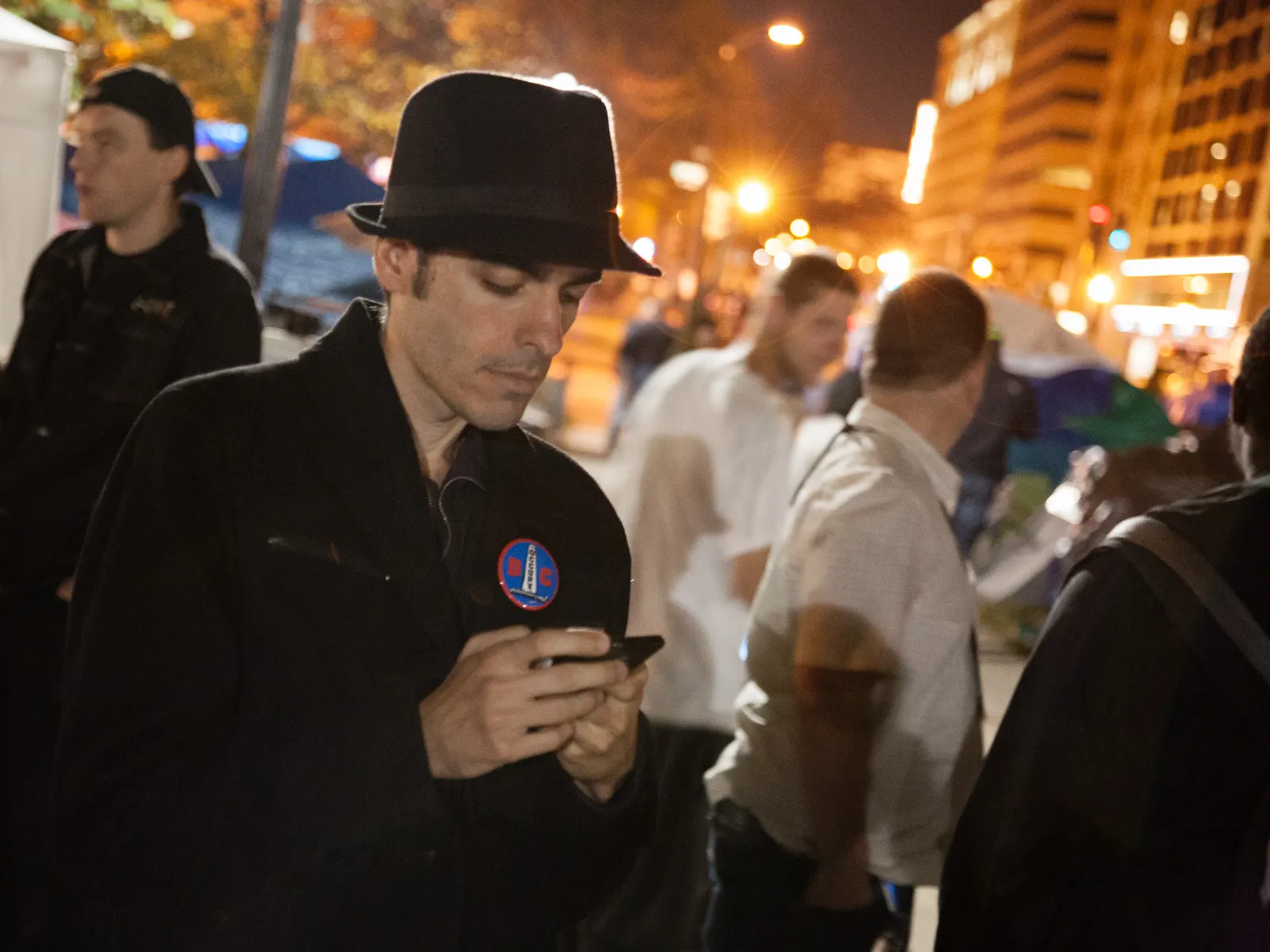
Looking back at these photographs now, I feel the emotional weight of proximity. The images don’t shout; they invite. They ask us to sit with moments of shared food, improvised shelters, and late-night conversations. Moreover, the people here reveal vulnerability and resilience. The effect is subtle yet persistent: the images draw us into a world where political disagreement is inseparable from care, and where protest depends as much on listening as on resistance. In essence, the camera doesn’t resolve the tension—it maintains it.
What Becomes Visible Through Looking
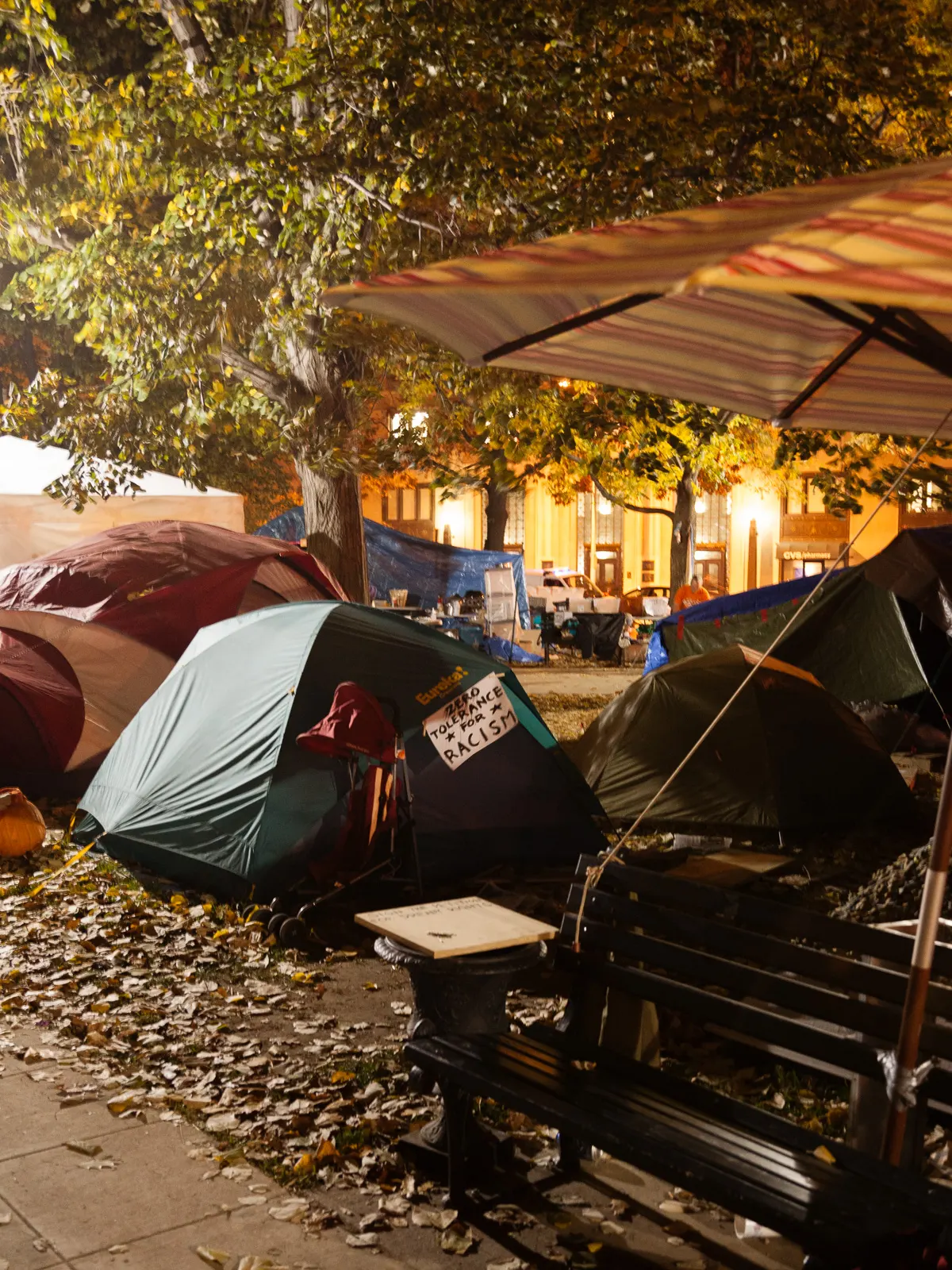
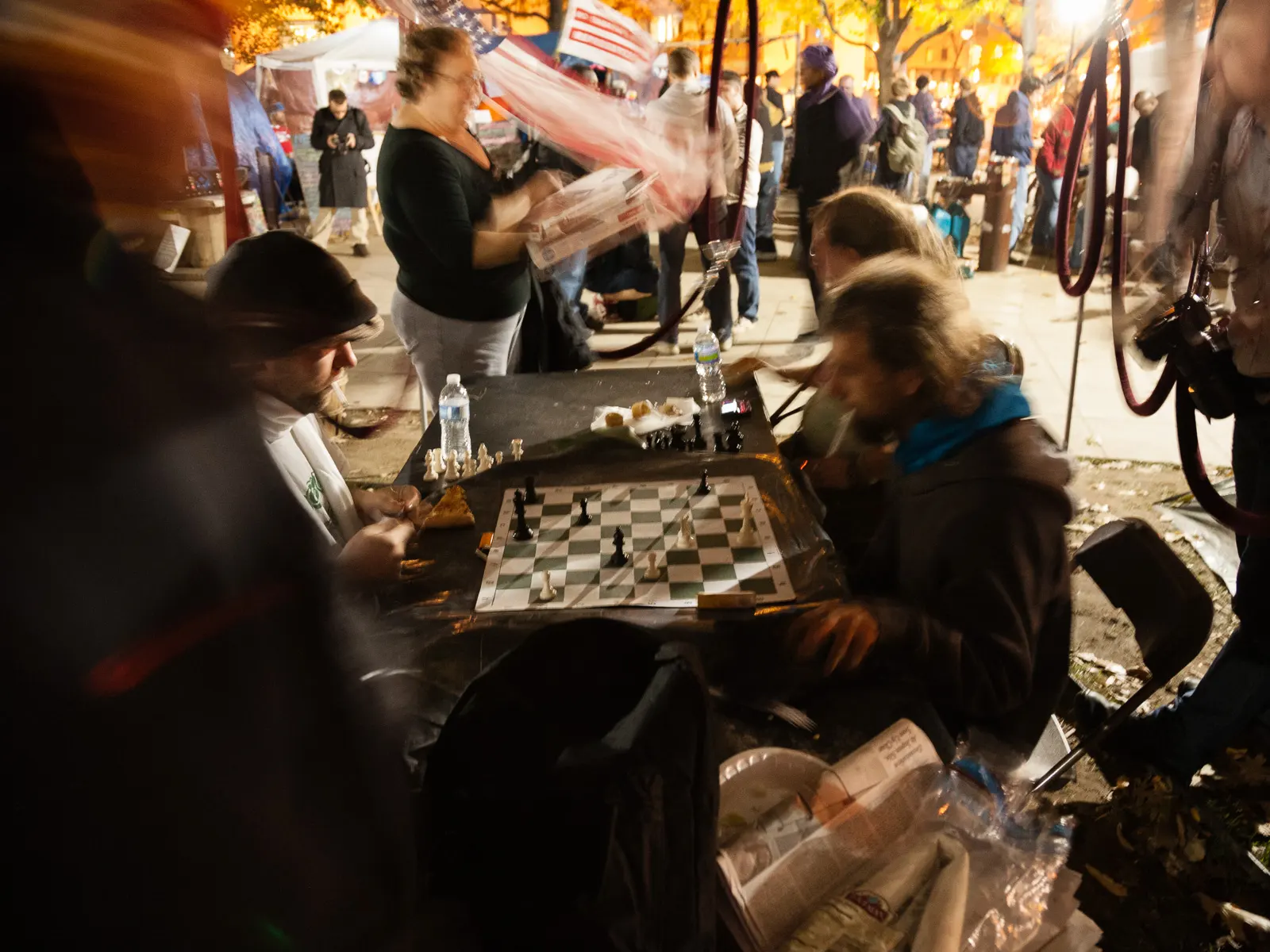
Through sustained attention, something deeper comes into view. Occupy DC was not only about challenging the wealth of the “1%,” but about redefining who gets seen, heard, and allowed to belong in public protest. As a result, strangers became allies. Daily assemblies, shared responsibilities, and acts of civil disobedience forged bonds that many participants described as life-changing. In these images, the protest reveals itself as a social experiment—an attempt to live differently, even temporarily. Belonging emerges not from consensus, but from shared struggle.
Why the Occupy DC Movement Still Matters
Occupy DC persisted into 2012 before fading from public view as media attention shifted elsewhere. McPherson Square returned to normal. The tents disappeared. Yet the movement’s impact did not vanish with them. The friendships, the sense of collective purpose, and the belief that change was possible endured. These photographs remain as quiet evidence of that moment—of people who realised, however briefly, that community could form in the heart of power, and that looking closely might help us see not just injustice, but each other.
PHOTO DETAILS
Location: McPherson Square, Washington, D.C.
Date: November 2011
Camera: Canon EOS 5D and EF24-105mm f/4L IS USM lens
Thank you for taking the time to look. These images document the Occupy DC movement, and sharing them helps keep the conversation alive.