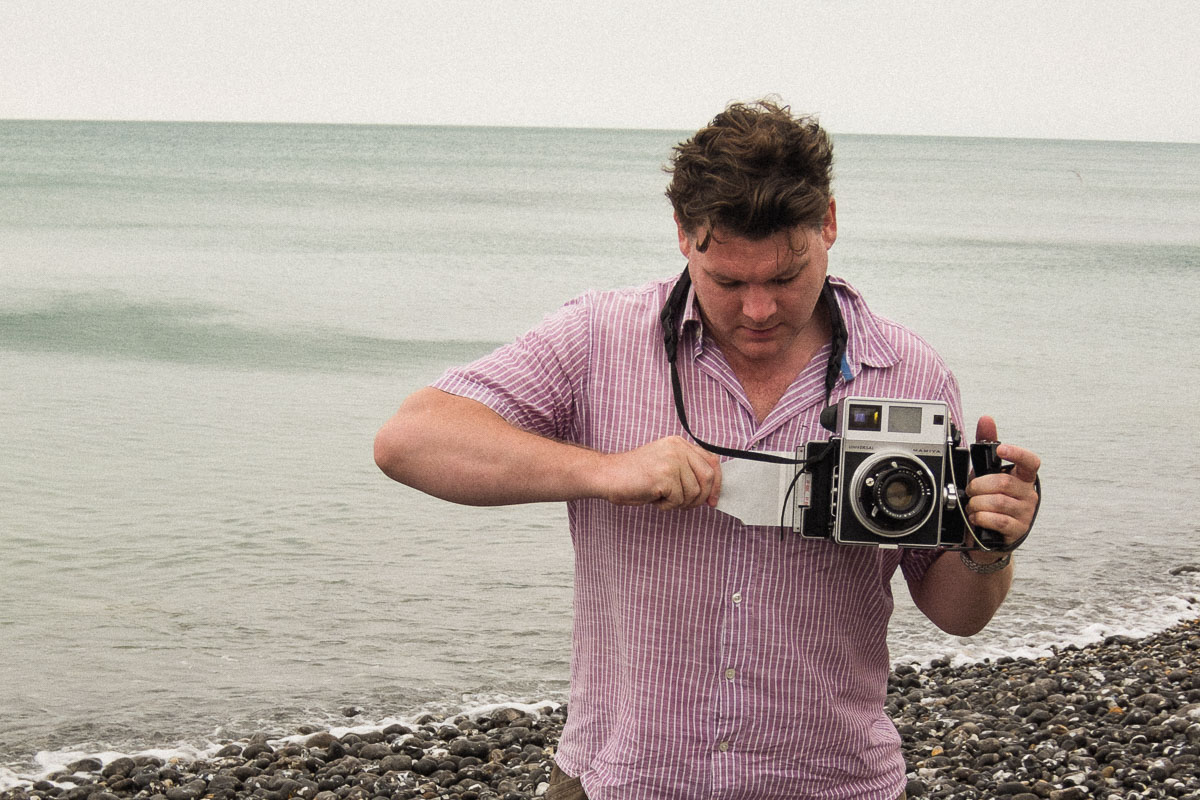
Photography first made an impression on me in primary school, when I took a photo of someone using a pinhole camera I built from black cardboard and a milk-bottle top. From that small experiment grew two lifelong interests: making things and understanding people.
Looking back, those two fascinations have shaped everything I have done since.
But my early career followed an unusual path. I began as a cricket bat maker for Gray-Nicolls, then completed an apprenticeship in carpentry and joinery with William Ellis—work that satisfied my love of making and working with my hands.
After being made redundant, however, I changed direction. Having left secondary school with few qualifications, I spent a year teaching myself enough psychology, biology, and mathematics to gain entry to higher education. I subsequently studied psychology and neuroscience at Keele University, driven by a growing fascination with how people think, feel, and behave.
After graduating, I continued my education at University College London, reading neuroscience. I then worked at the University of Oxford, conducting MRI research into brain timing mechanisms, before completing a PhD in psychology at the University of Birmingham, where I used EEG & MRI to study motor control and cognition in healthy ageing and disease.
For over twenty years, I have studied how thought and action arise from neural processes—and how they can be enhanced—while working as a university educator, researcher, and invited speaker. Today, I am an associate professor of psychology, where I teach, supervise, publish research, and contribute to public engagement and academic leadership.
Photography, however, has always accompanied my academic career. During my doctoral studies, I founded a photography business specialising in social events, photographing more than 500 assignments and earning international recognition for my work. Along the way, my photography appeared in a range of magazines, and I authored a guide on how to take better photos, helping others refine their technical skills and creative eye. It was an intense and joyful chapter, but eventually I shifted my focus back toward documentary and personal work.
Today, my creative practice centres on long-term, self-initiated projects, often working with 35mm film—a slower, more deliberate process that gives me the time and freedom to explore the gestures people make, the spaces they inhabit, and the traces they leave behind.
In many ways, the two strands of my work—exploring the mind from the inside through psychology and observing life on the outside through photography—are closely intertwined. Whether attending conferences abroad, delivering talks, or exploring everyday life close to home, I seek out the ordinary moments and overlooked spaces that quietly shape our identity.
For me, documentary photography is a naturalistic way of understanding people. It complements the scientific methods I use to study mind and behaviour in the lab. Photography evidences life as it unfolds; psychology seeks to understand it.
Throughout my career, one thing has remained constant: curiosity. Even now, I feel much the same as I did when I first experimented with that handmade camera—still inquisitive, still observant, and still trying, in different ways, to understand people and the worlds they create.