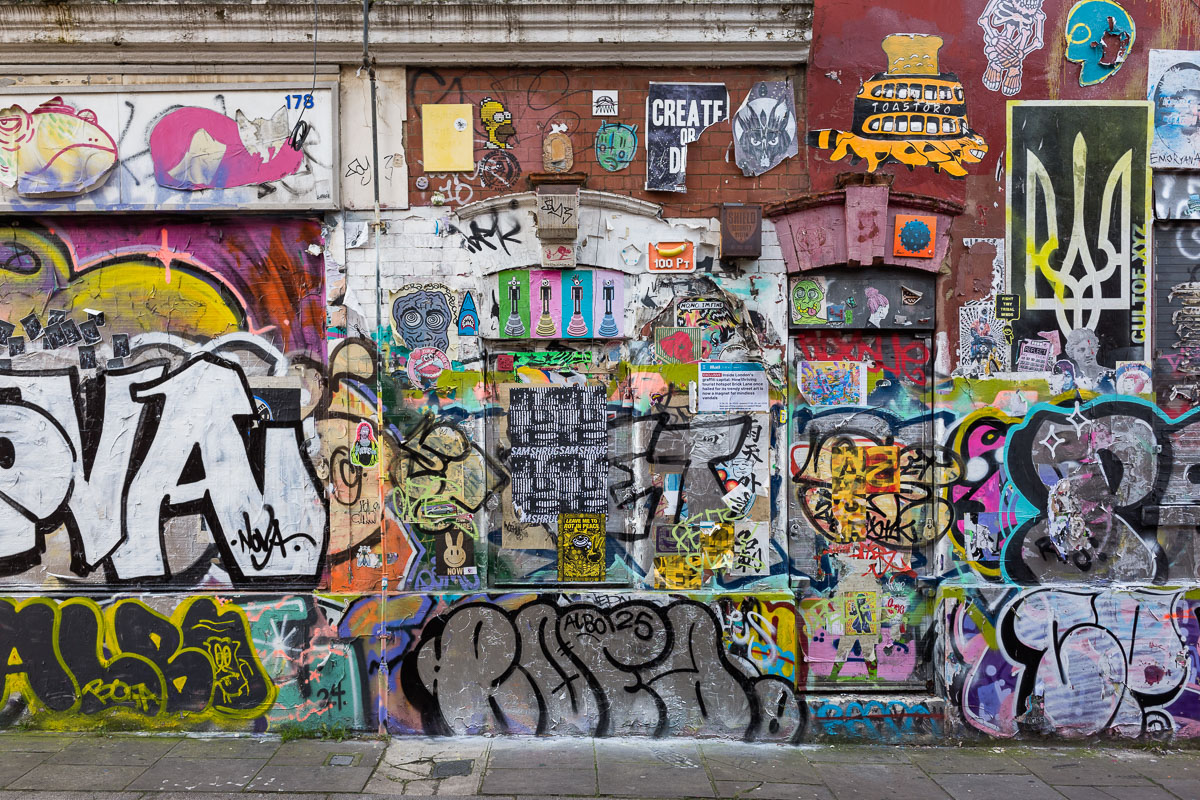
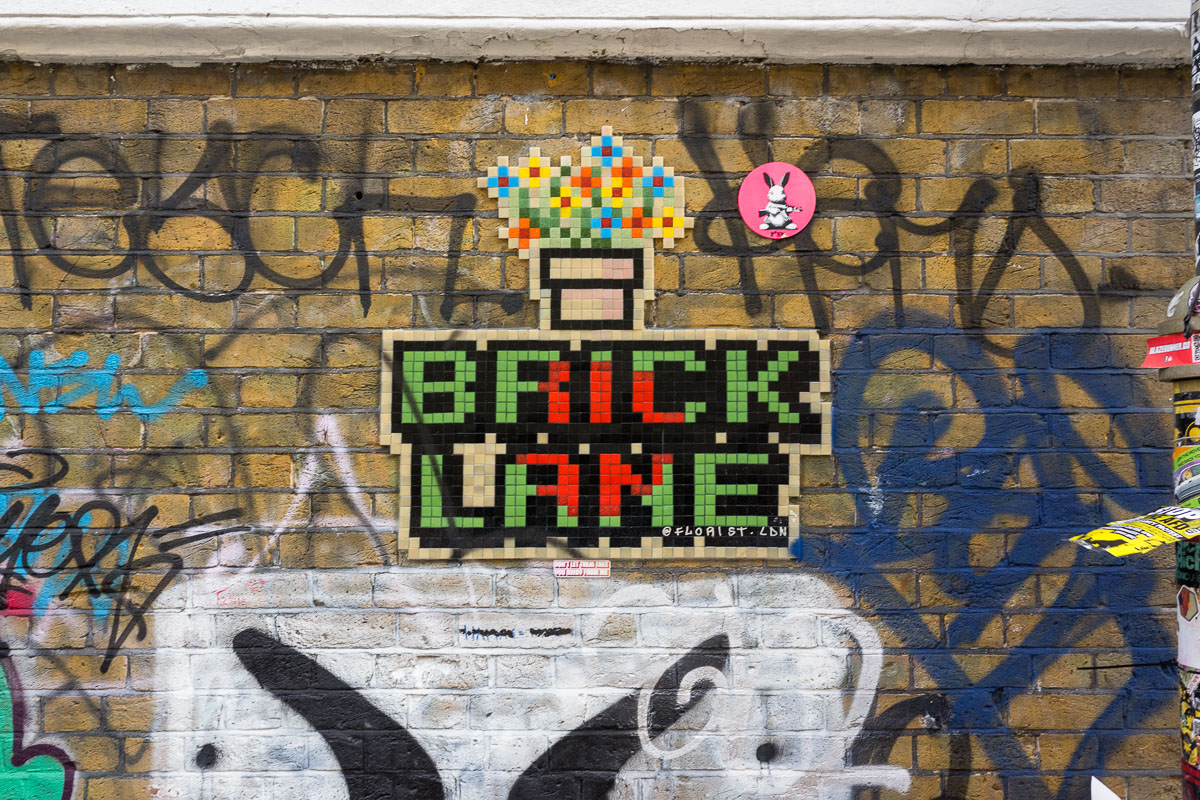
At the beginning of the year, I walked through Brick Lane in East London with my camera, focusing on the walls and photographing the graffiti and street art rather than looking for famous murals.
I captured whatever caught my eye—slogans, posters, stencils, and fragments of graffiti/street art that felt charged or meaningful. The walls seemed to speak: mocking, protesting, grieving, warning. Photographing them became a way of listening.
This post examines how graffiti and street art in Brick Lane express the neighbourhood’s public voice, showcasing how artists, activists, and passers-by use the walls to comment on politics, identity, power, and belonging.
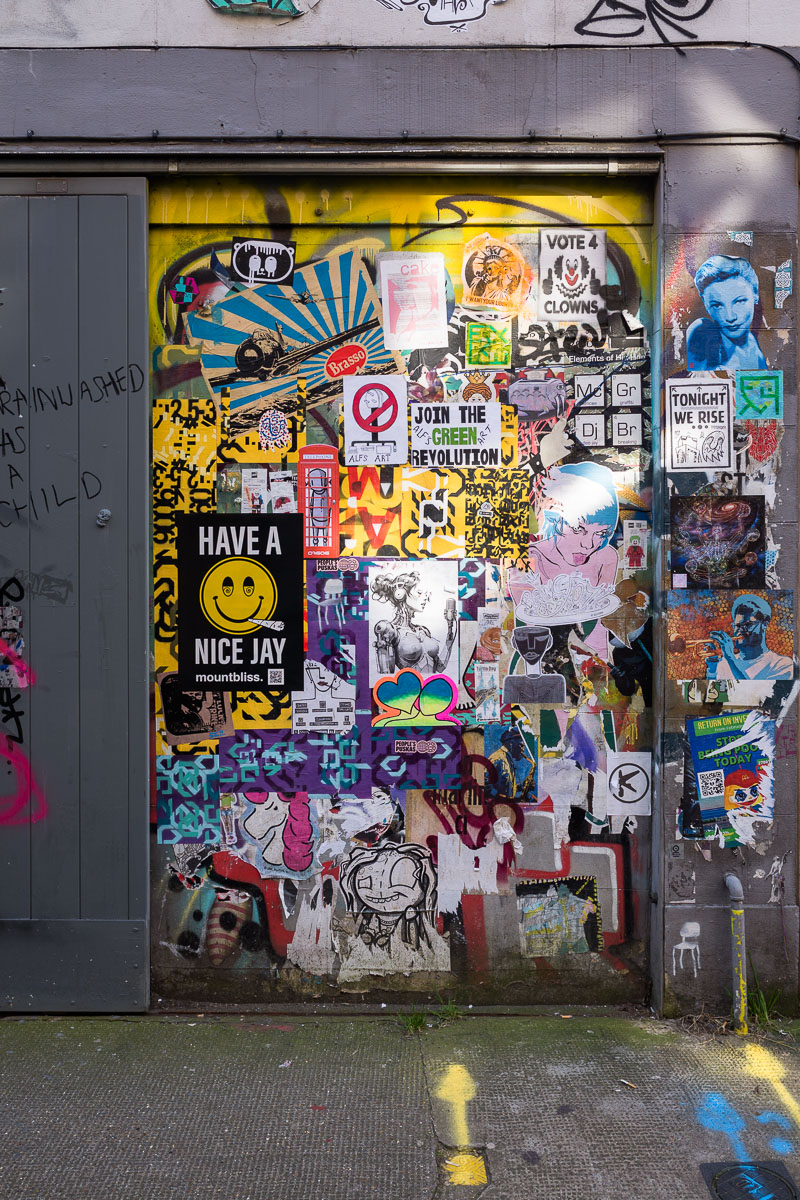
Layers of History on Brick Lane’s Walls
Migration, activism, and cultural exchange have long shaped Brick Lane, and its colourful walls reflect that history.
Layers of paint, posters, and stencils accumulate over time. New messages appear while older ones fade or are covered over. Graffiti and street art serve as a public noticeboard, allowing people to express themselves visually, rather than orally.
Some works shout. Others whisper. But together they form a constantly changing record of what people are thinking and feeling.
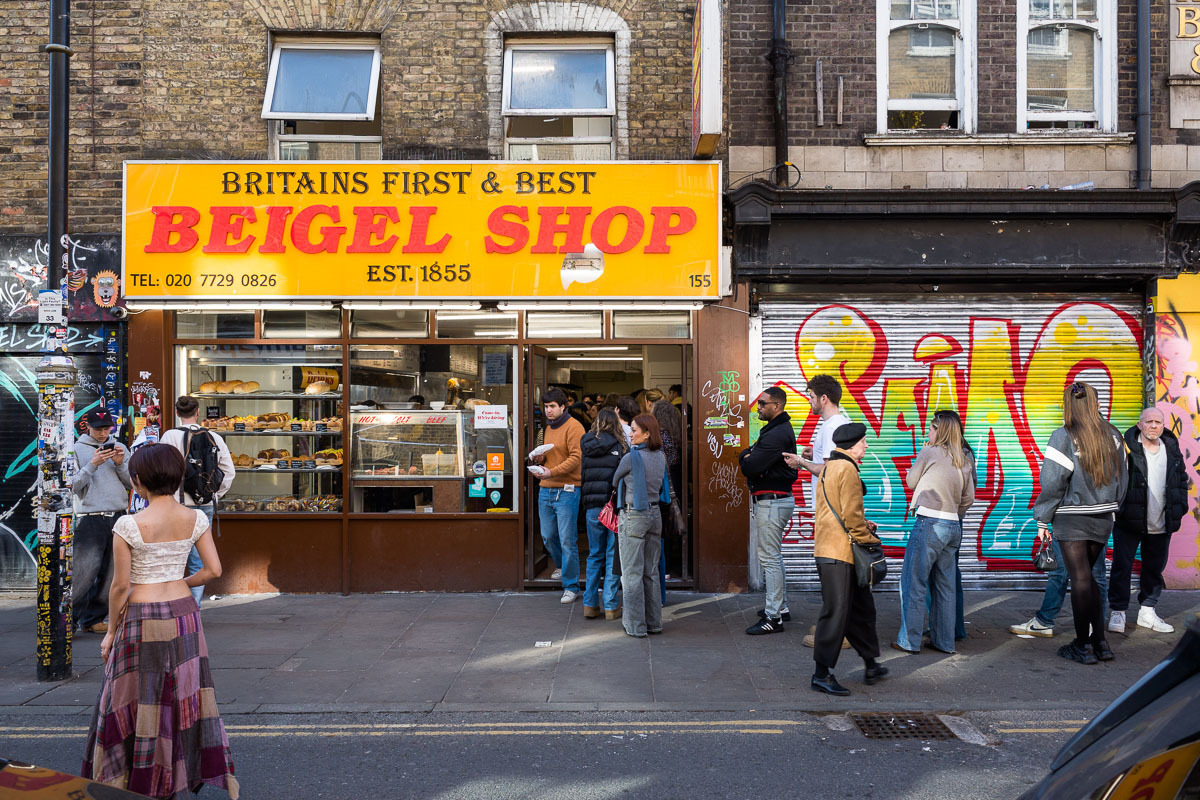
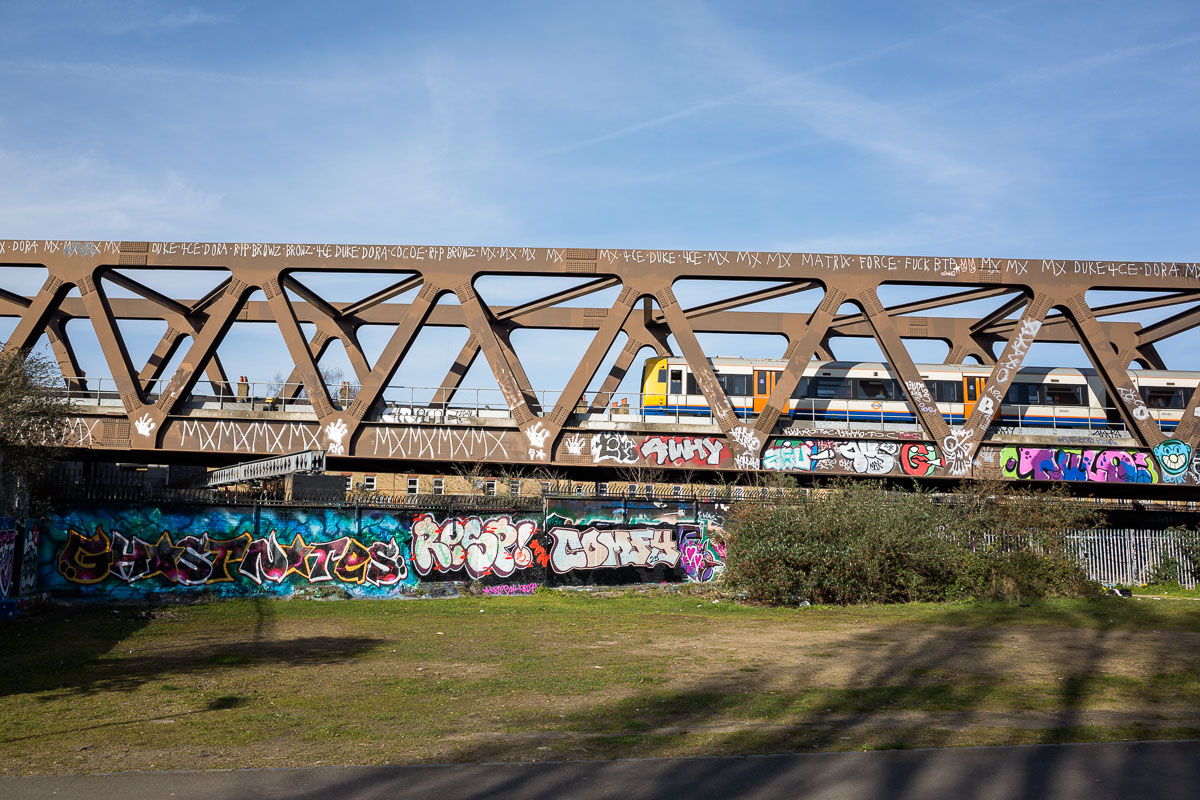
Politics and Power in Graffiti and Street Art
Walking along Brick Lane, I see layers everywhere. Posters pasted over posters, and fresh paint sprayed over older paint. Doors and windows beneath images and words.
One mural reworks The Last Supper, painted above the words “The World Is Watching,” over the colours of the Palestinian flag. It’s bold and impossible to ignore.
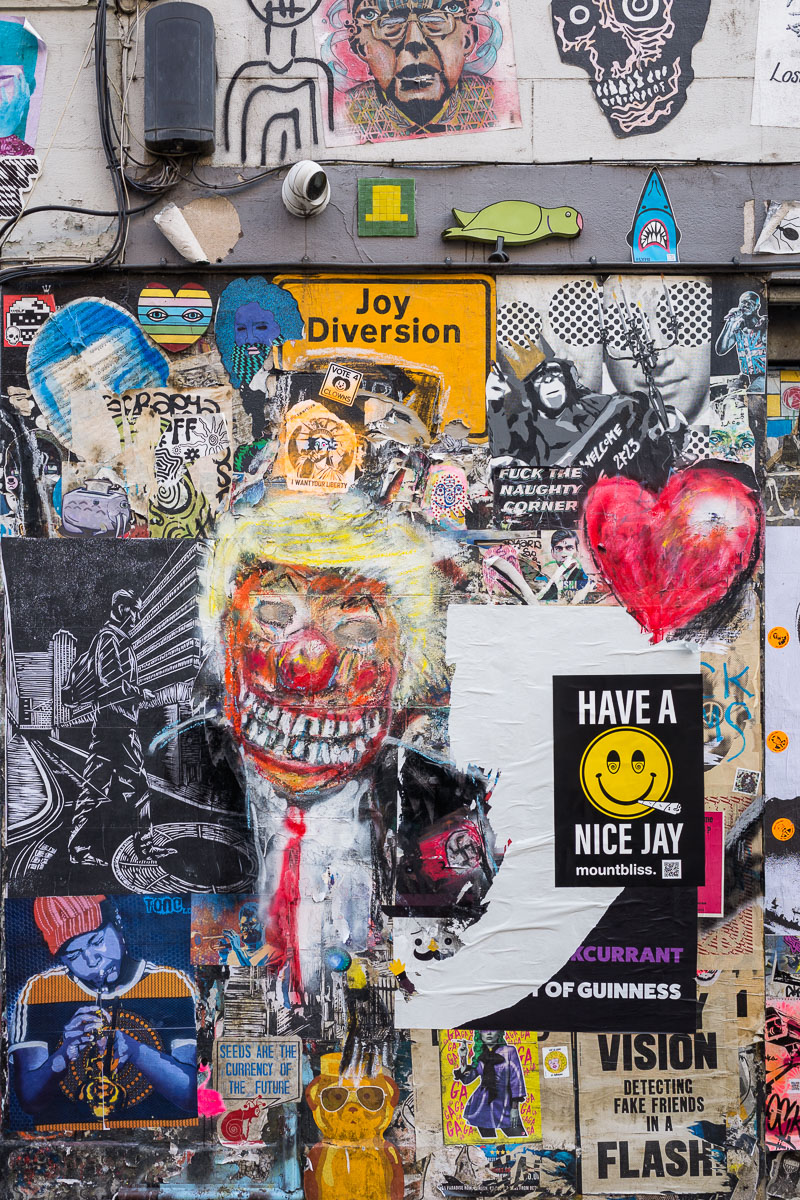
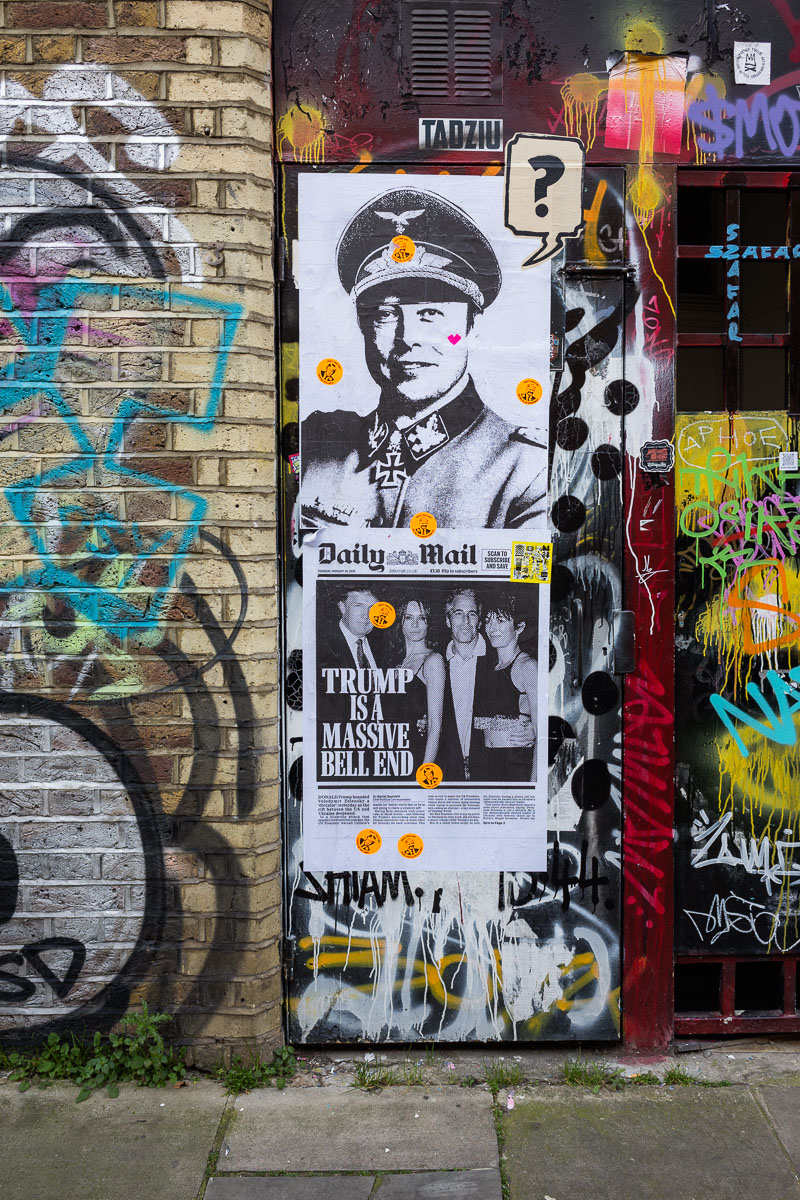
Another wall shows Donald Trump painted in a frantic, Basquiat-inspired style. His face twisted into something closer to a political symbol than a portrait. Nearby, a poster of Elon Musk in a German military uniform above a Daily Mail cover featuring Trump and Epstein feels deliberate and unsettling.
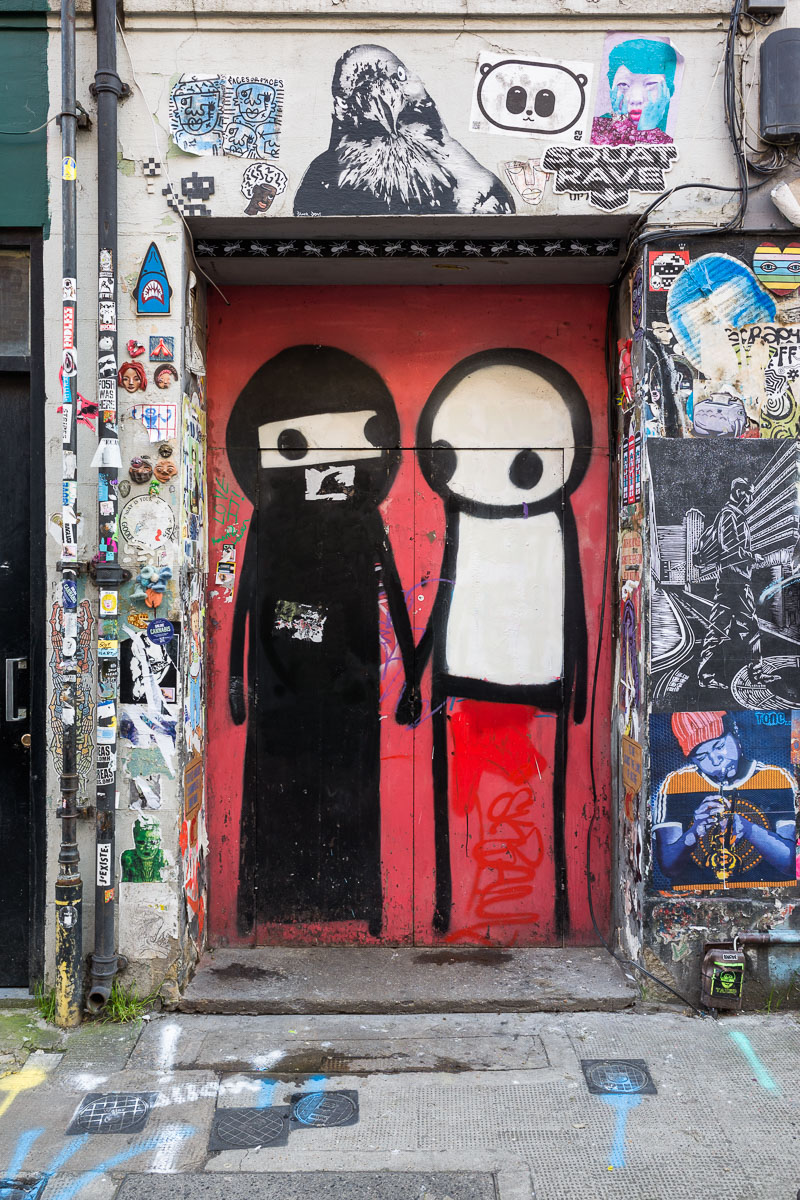
Among these loud images, a quiet mural by Stik shows a woman in a niqab holding hands with another figure—no slogans, no explanation, just connection.
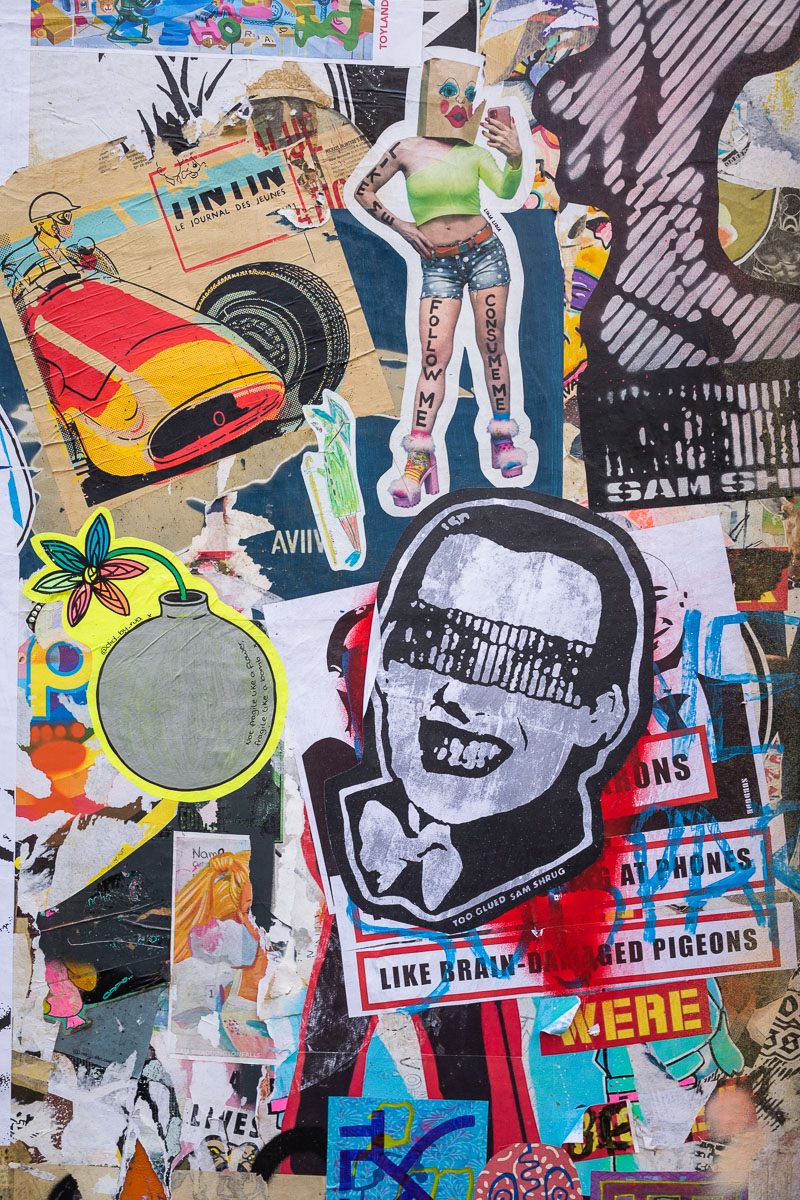
And if you look closer, smaller messages appear between larger works. For example:
“LIKE BRAIN-DAMAGED PIGEONS.”
“LIKE ME, FOLLOW ME. CONSUME ME.”
“VOTE FOR CLOWNS.”
Some are partly covered; others are fading.
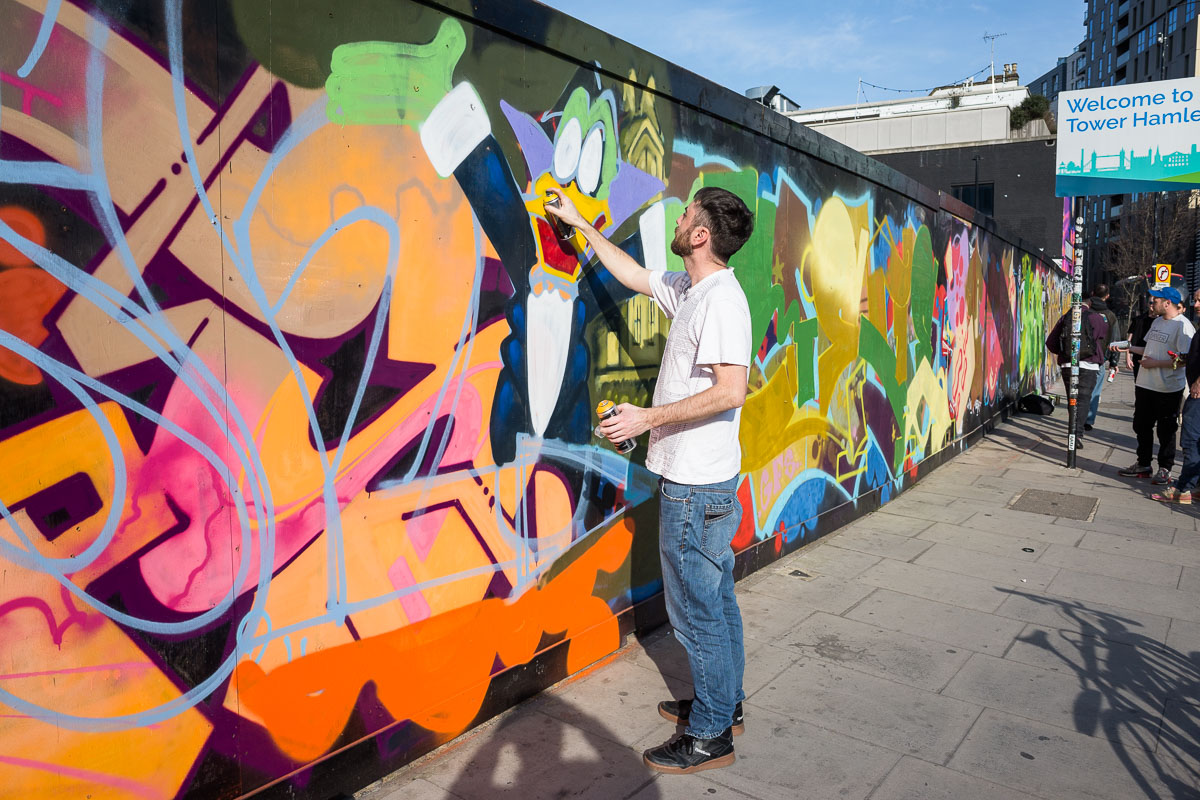
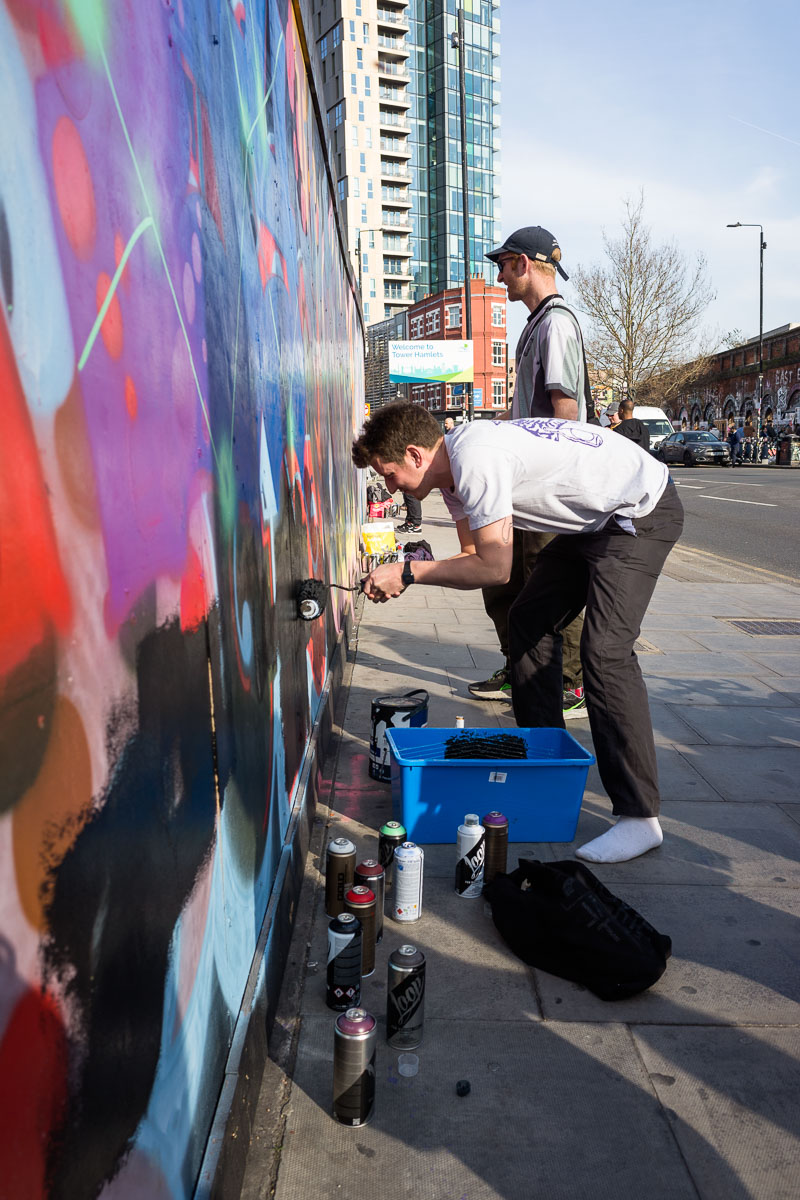
Further along the street, artists work on fresh pieces—spray cans raised, stencils pressed to walls.
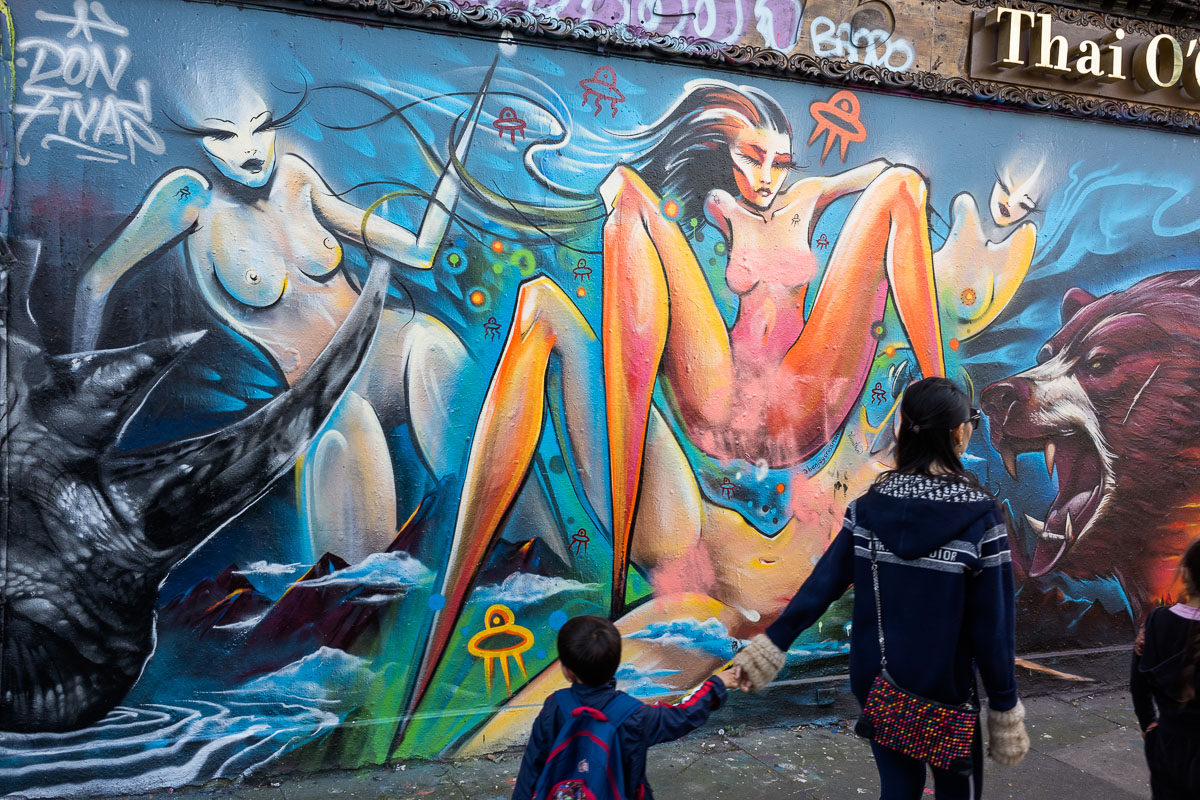
Bodies appear in the artwork too—a mural of nude women has been altered, with private parts sprayed over.
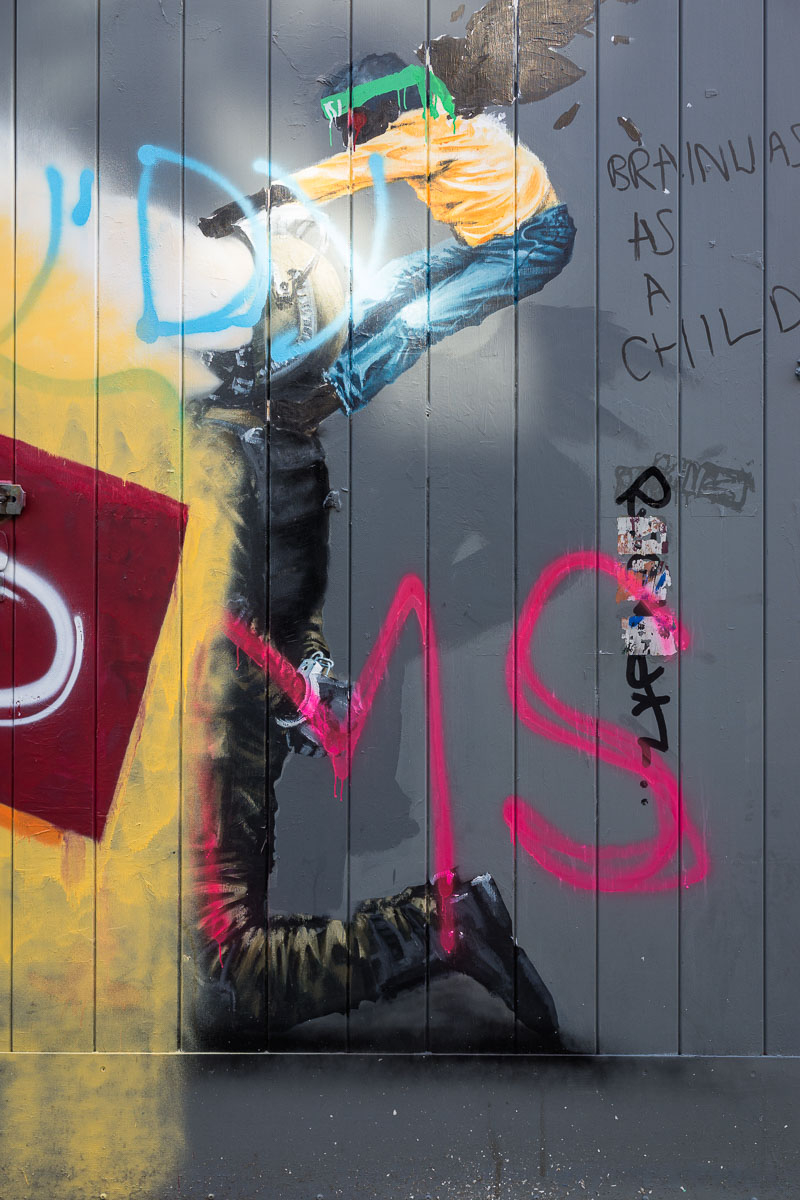
Near the end of the street, a damaged piece by Palestinian artist Taqi Spateen shows a handcuffed fighter pilot holding a winged child, symbolising innocence and restraint during conflict. Despite overpainting, the image retains its message.
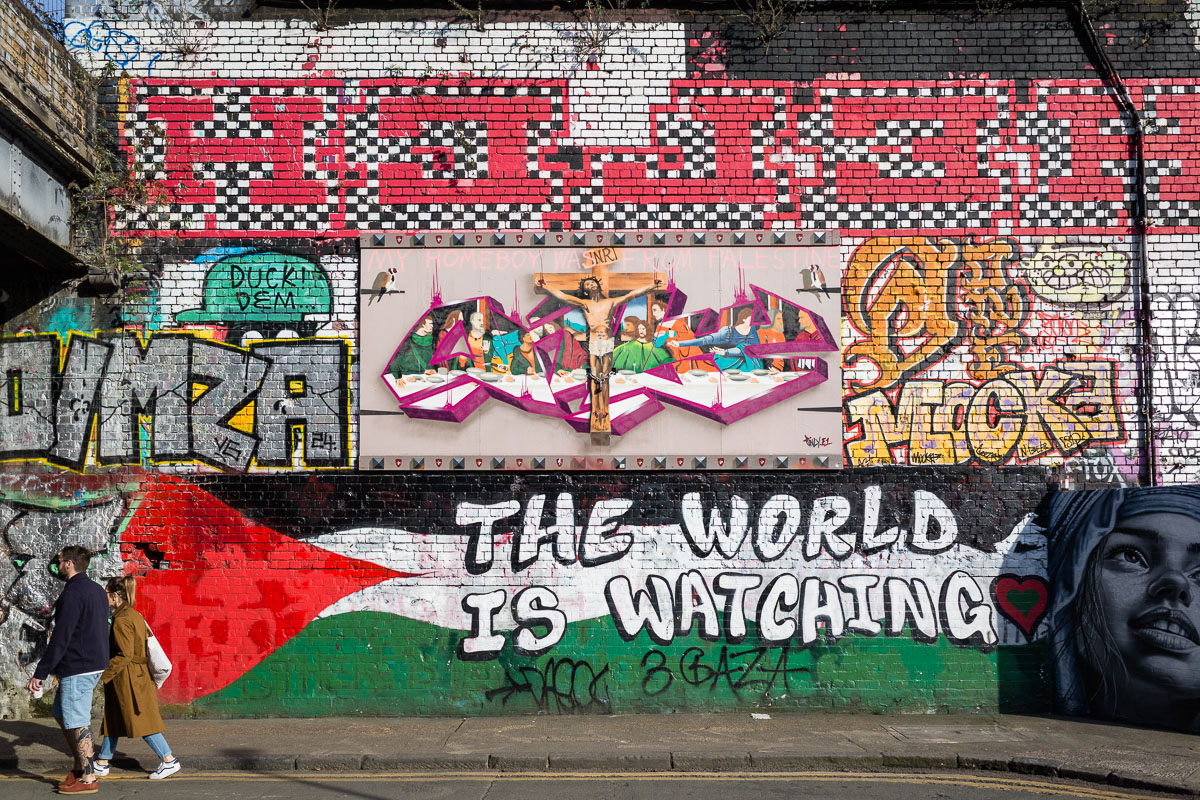
How Graffiti and Street Art Shape Everyday Life in Brick Lane
Walking Brick Lane is intense. The walls feel emotional—angry, sarcastic, tired, hopeful, tender.
The artwork depicting Trump and Musk highlights anxieties over power concentrated among the “1%” and the increasing intersection of politics, finance, and media.
Smaller slogans feel mocking and cynical. They reflect frustrations with social media, consumption, and manipulation.
At the same time, the Stik mural slows the pace. In a street full of noise, it feels quiet and human, showing that public displays of care or intimacy can be political acts.
Watching artists at work makes the whole space feel alive. Nothing here feels finished. Everything is still changing.
Why People Create Graffiti and Street Art
These photos remind me that graffiti is more than decoration or vandalism; it’s a way for people to understand the world. When formal politics feels distant or broken, walls become spaces where people express anger, humour, protest, and solidarity.
Graffiti rarely argues directly. Instead, it works through symbols, exaggeration, parody, and repetition. It shows what people fear, what frustrates them, and what they want others to notice.
Meaning builds over time. Layers accumulate, messages overlap. What remains is not always the most polished artwork, but what resonates with people. Public space matters—anyone can encounter these creations. No ticket is required. No algorithm dictates what you see.
Why Photos of Graffiti and Street Art in Brick Lane Matter
Photographing graffiti and street art matters because the work is temporary. Paint fades, posters tear, and walls get cleaned or repainted. Photography preserves a record of what people expressed at a particular moment in time.
The walls of Brick Lane do not offer clear solutions to political problems. Instead, they send signals of resistance, humour, anger, care, and hope. They remind us that politics doesn’t exist only in parliament, newspapers, or social media. Sometimes it appears on a wall, noticed in passing, where nobody officially permits it to speak.
So, next time you walk down Brick Lane, slow down—the walls are already talking.
Thank you for looking.


